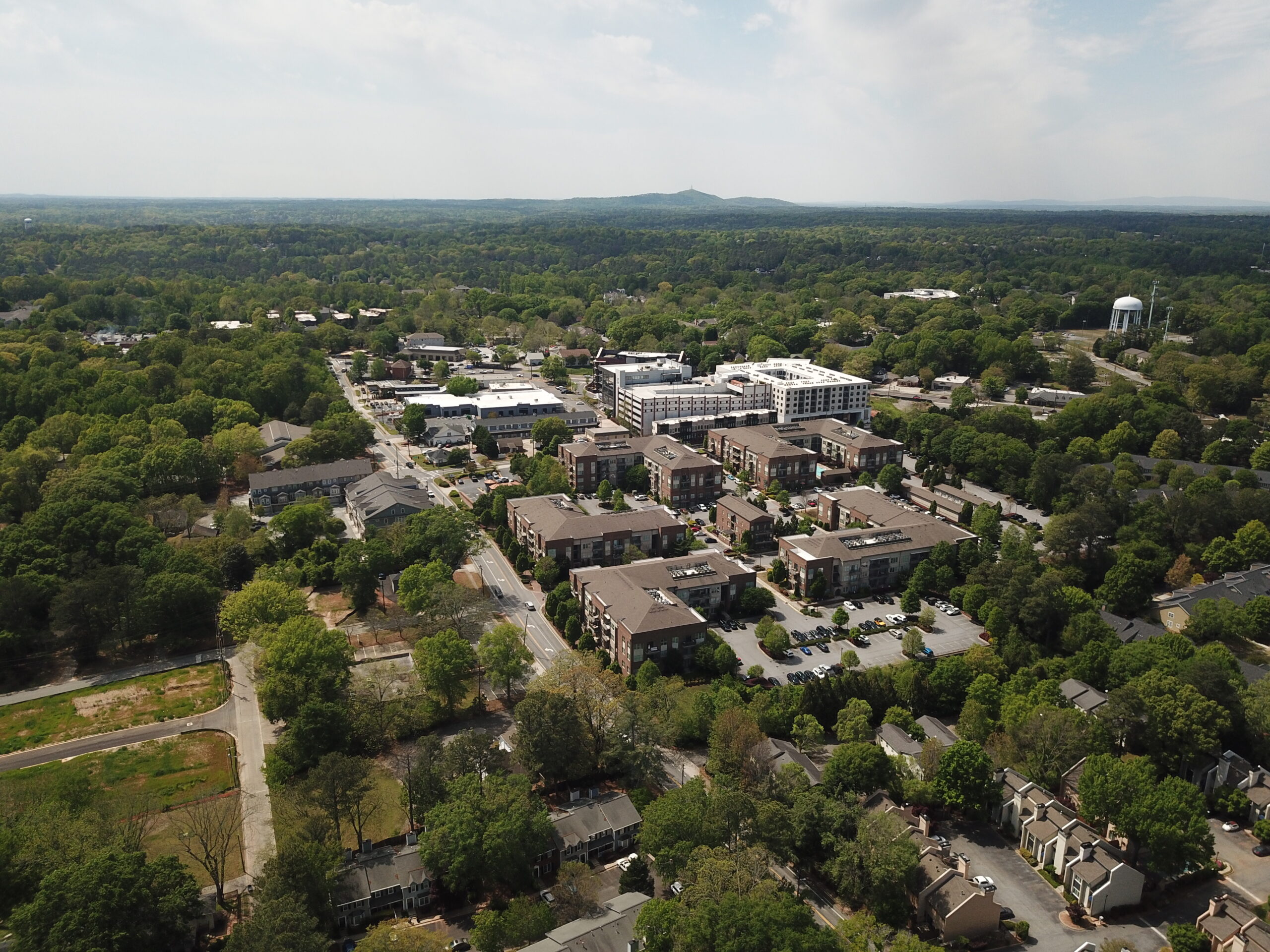

If you have ever searched “restaurants near me” from a couch in Roswell and gotten results in Alpharetta, Sandy Springs, and one place in Woodstock, you already understand the problem the Roswell Business Directory was built to solve. National search treats Roswell as a dot inside metro Atlanta. It does not know that Canton Street empties out at a different hour than Holcomb Bridge, that the Chattahoochee runs cold enough to change what you wear in July, or that the third Thursday of the month rearranges the entire downtown.
The Roswell Business Directory at roswellga.online is a hyper-local search engine built for one city. It lists local businesses, lets Roswell residents review them, and it carries a growing set of free live-data applications that answer the questions residents actually ask: where can I park downtown right now, is Highway 9 backed up, is the river safe to float, are the trails muddy, and what is happening on Canton Street tonight.
All of it is free to use. Business registration is free. The tools are free. This article walks through every piece of it, what each one does, where the data comes from, and how to get the most out of it, whether you own a business here or you just live here.
Companion reading on Roswell Pulse: our guide to Alive in Roswell, our downtown parking breakdown, our Roswell traffic and commute guide, and our cost of living in Roswell comparison.
Understanding a Hyper-Local Search Engine
A hyper-local search engine is a directory with a geographic ceiling. Google indexes the world and then tries to guess how much of it you meant. A hyper-local index starts from the opposite direction: everything in it is already inside the city limits, so relevance is the default state instead of a ranking problem.
That single constraint changes what the platform can do.
Category depth over category breadth. A national platform needs one “Home Services” bucket that works in Phoenix and Portland. A Roswell-only index can carry more than 50 categories tuned to what actually exists here, and it can put a two-person window cleaning operation on the same footing as a franchise, because it is not sorting by ad budget across a metro area of six million people.
Local intent is assumed, not inferred. When someone searches the directory, the platform does not have to run a probability calculation about whether “near me” means two miles or twenty. Every result is Roswell. That is why the search behaves differently from what you are used to.
The index is small enough to verify by hand. This is the part that national platforms structurally cannot copy. At roughly 950 listings as of mid-2026, a human being can look at every single business in the index. Google cannot. Yelp cannot. That is a feature of scale, and it is the reason the verification layer described below is possible at all.
Content and utility live in the same place. A directory that also runs live parking data, live river gauges, live traffic, and an event guide gives residents a reason to visit that has nothing to do with looking up a phone number. Those visits are what make the business listings worth having.
The Roswell Business Directory at a glance
| Tool or feature | What it does | Data source | Best for | Cost |
|---|---|---|---|---|
| Business Directory | Hyper-local index of Roswell businesses across 50+ categories | Owner submissions plus manual verification | Anyone looking for a local business | Free to search, free to list |
| Local reviews | Verified residents review businesses as “Locals” | Roswell residents | Residents who want reviews from neighbors | Free |
| Membership tiers | Free listing plus optional marketing upgrades | Directory platform | Business owners who want visibility | Free tier plus paid upgrades |
| Advertising | Paid placements and scheduled posts | Directory platform | Businesses running promotions | Paid |
| Downtown Parking Wizard | Free vs paid parking, 10 downtown locations, live projection | City of Roswell parking policy plus modeled demand | Anyone driving to Canton Street | Free |
| Roswell Traffic Hub | Live traffic map plus projected volume by day and hour | Waze and GDOT | Commuters and event traffic | Free |
| Roswell River Hub | Live Chattahoochee conditions, Buford Dam to Paces Ferry | USGS gauges, BacteriAlert, NOAA | Paddlers, anglers, floaters, parents | Free |
| Roswell Parks Hub | Parks and trails directory with computed trail conditions | Open-Meteo, USGS, city and park sources | Hikers, bikers, dog owners, families | Free |
| Survive Alive App | Complete guide to the Alive in Roswell event series | City event info plus live weather | Anyone going downtown on a third Thursday | Free |
| Permit wizards | Step-by-step navigation of Roswell city processes | City of Roswell published processes | Homeowners and contractors | Free |
Figures and rates current as of September 2026. Live tools update themselves. Static figures in this article should be re-verified before resharing.
The Directory Itself: A Search Engine With the City Limits Built In
The core of roswellga.online is the business index. As of July 2026 it carried roughly 950 businesses across more than 50 categories, with a review count in the dozens and climbing as the resident review system rolls out.
How the search works. You can browse by category, by neighborhood, or by open search. Category pages and neighborhood pages are real landing pages, not filtered views that disappear when you refresh, which means they get indexed and they show up when someone searches for a category plus “Roswell” from outside the platform. A business that lands well in a directory category page is picking up search traffic it did not have to buy.
What a listing carries. Name, category, contact information, location, description, and the review thread from local residents. Paid tiers extend that with more media, better placement, and promotional posting, covered in the next section.
Why the index is deliberately small. There is no value in padding a Roswell directory with Alpharetta listings to make the number look bigger. The number that matters is the percentage of real Roswell businesses that are actually in it, and that number only goes up if the index stays honest.
Where it fits against the alternatives. Google Business Profile is not optional for any local business and nothing here replaces it. What a hyper-local directory adds is a second indexed surface that you control, a review pool that is exclusively local, and a placement that costs nothing to hold. For a small business in a competitive category, a free listing on a platform that ranks for local terms is free ground.
Free Registration, and What the Paid Tiers Actually Add
Registration is free. Not free for the first year, not free with a card on file, not a trial. A Roswell business can claim or submit a listing and stay on the free tier indefinitely.
The free tier includes a full business listing, category and neighborhood placement, the ability to receive and respond to reviews from verified Roswell residents, and inclusion in directory search.
The paid tiers are marketing upgrades layered on top. The membership ladder runs Free, Blue, Silver, Gold, and Diamond. Each step up adds visibility and promotional capability: better placement in category and search results, expanded listing media, featured positioning, and access to scheduled promotional posting and paid placement inventory. Billing runs through Stripe as a monthly subscription that you can cancel yourself.
Why this structure and not a listing fee. The directory only works if it is complete. Charging for entry guarantees an incomplete index, which makes the search results worse, which makes the whole platform worth less to residents, which makes the paid placements worth less to advertisers. Free entry plus optional upgrades is the only version of this that holds together.
Who should upgrade and who should not. If you are a service business with a wide catchment and you already rank well organically, the free listing may be all you need. If you are in a category with heavy local competition, if you are new to Roswell, if you have a physical location that depends on foot traffic, or if you run promotions that need distribution, the upgrade tiers are the part of the platform designed for you. Start free, look at where your listing lands in your category, and upgrade based on that instead of on a hunch.
Current tier pricing is listed on the membership page at roswellga.online. Rates are set by the platform and can change, so confirm on the page rather than relying on any figure quoted elsewhere.
Verification: Every Business Is Checked by a Human
This is the least visible feature on the platform and the one that does the most work.
Every business that appears in the Roswell Business Directory is reviewed by the team to confirm two things: that the business is real, and that it is actually local to Roswell. Not a lead-generation shell with a rented mailbox on Alpharetta Highway. Not a national franchise call center listing a Roswell service area it dispatches into from three counties away. Not a directory-scraped ghost listing for a company that closed in 2019.
Why this matters more in home services than anywhere else. Anyone who has searched for an emergency plumber, a roofer after a storm, or a tree service after a windy week in North Fulton has run into the lead-broker layer: listings that look like local companies, take your call, and sell your information to whoever bids highest. Those companies are extremely good at populating directories. A directory with no verification step fills up with them by default, because they submit listings at industrial volume and real local businesses submit one listing, once, and then get back to work.
What verification does not claim to be. Verification confirms that a business exists and operates in Roswell. It is not a license check, a quality guarantee, an endorsement, or an insurance audit. Hire the way you always should: check licensing where the trade requires it, get the estimate in writing, and read the reviews.
The claim process. If you own a business that is already listed, you can claim the listing through the platform and take control of the information on it. If your listing has details that are wrong, claiming it is the fastest fix.
Become a “Local”: The Resident Review Layer
The directory has two kinds of accounts. Business accounts manage listings. Resident accounts, called Locals, review them.
What a Local can do. Write reviews on any business in the directory, keep a profile that ties reviews together so readers can see whether a reviewer is a regular or a one-time visitor, and contribute the accumulated local knowledge that everyone in Roswell trades in Facebook comment threads and never writes down anywhere permanent.
Why a separate role instead of open reviews. Open review systems get gamed. They get gamed by competitors leaving one-star reviews, by reputation firms leaving five-star reviews in bulk, and by out-of-town accounts with no stake in whether the information is accurate. Tying the review layer to a resident role narrows the pool to people who live here and have to see their neighbors at Kroger.
What makes a review useful. Specifics beat sentiment every time. “The wait was 40 minutes at 7 on a Friday but 10 minutes at 5:30” is worth more to the next reader than four stars and the word “great.” Same with the plumber who showed up in the quoted window, the shop that honored a warranty without an argument, and the contractor whose estimate matched the invoice.
The compounding effect. A directory with 950 businesses and no reviews is a phone book. The same directory with a live resident review layer becomes the place people check first, and that is what makes a listing worth holding and an upgrade worth buying. Locals are the reason the whole thing works.
Advertising: Paid Placement and Scheduled Posts
For businesses that want more than a listing, the directory carries its own advertising inventory.
Paid placements put a business in front of directory traffic at the points where intent is highest: category pages, search results, neighborhood pages, and the tool pages that pull the heaviest traffic. A landscaping company in front of Parks Hub traffic in April, a restaurant in front of Survive Alive App traffic on a third Thursday, and an auto shop in front of Traffic Hub traffic during a rush hour are all buying attention from people who are already thinking about the thing they sell.
Scheduled posts let a business queue promotional content ahead of time and have it publish on its own. A patio special that posts Thursday afternoon, a seasonal service reminder that posts the first week of March, a sale that runs for a weekend and then stops. This is standard capability on enterprise marketing platforms and almost never available to a small business at a small business price.
Why the audience matters more than the impression count. A directory with local-only traffic delivers a smaller number that converts at a higher rate, because there is no wasted geography in it. Nobody in Marietta is going to click a Roswell directory ad by accident and then not become a customer. Every impression is already inside the service area.
Practical advice on running it. Match the placement to the moment. Local advertising works on timing more than on volume, and the tool pages give you timing that a generic display buy cannot: weather, events, traffic, and river conditions all move demand for specific categories in ways you can schedule against.
The Roswell Downtown Parking Wizard
Parking is the single most argued-about subject in Roswell, and the argument is almost never about whether there is enough parking. It is about which parking is free, which is paid, and how anybody is supposed to know the difference before they have already circled Canton Street twice.
The Roswell Downtown Parking Wizard exists to end that specific confusion. It is the only application in Roswell that puts free and paid parking on one page with live projected availability.
What it shows. Ten downtown parking locations on one screen, each with its current free or paid status, capacity, walking distance to Canton Street, and a direct Google Maps link. Free lots and paid zones are distinguished visually rather than buried in a rate table, because that is the actual question people are asking.
The live data feed. A ticker at the top of the page recalculates in real time: current district demand, the best free bet right now, current on-street rates, deck status, and the countdown to the next Alive in Roswell night. The app boots from the Eastern time clock, opens on the current hour, and refreshes on a timer. If you are looking at it at 6:40 on a Saturday, you are seeing Saturday at 6:40, not a static chart you have to read yourself.
An honest note about what “live” means here. The demand projection is modeled from typical downtown patterns. It is not wired to parking sensors, because Roswell does not have parking sensors. The app says so on the page. The status of each lot, the rates, and the policy details are verified against city sources; the fullness projection is a forecast, and it is labeled as one.
Current downtown parking facts, verified as of August 27, 2026. On-street rates changed effective August 1, 2026: the first two hours are free from 8 AM to 3 PM daily, then paid at an incrementally rising hourly rate, with a daily maximum and a modest fine for violations. Paid on-street zones cover Canton from Magnolia to Norcross, Elizabeth Way, and East Alley, including the East Alley surface lot. Two new 30-minute free spots were added on Elizabeth Way. Southern Post carries roughly 600 spaces and has been free since February 2026. The Green Street deck carries 394 spaces and currently reads as the best free option downtown. The paid pilot program is scheduled to end December 31, 2026, and the app carries a countdown to that date plus an automatic warning if you load it afterward.
How to use it. Open it before you leave the house, not when you are already on Canton Street with no signal and a passenger asking where you are going. Check the “right now” pill for the current hour, take the best free bet, and use the map link to drive straight there.
Pair it with the Traffic Hub if you are coming in during a rush hour or on an event night. Parking tells you where to stop; traffic tells you how to get there.
The Roswell Traffic Hub
The Roswell Traffic Hub is the local traffic application for one city instead of one metro area. Atlanta traffic coverage is excellent at the interstate level and nearly useless at the level of whether Holcomb Bridge is worth attempting at 5:15 on a Wednesday.
Live map. The hub pulls a live traffic map so you can see current conditions on Roswell roads without opening three apps and interpreting a metro-wide view.
Projected volume by day and hour. This is the part that a live map cannot give you. The hub carries modeled traffic volume across the week so you can plan a trip that has not happened yet. If you are deciding whether to run an errand now or after dinner, a live map only tells you about now.
Seven corridors. The hub breaks Roswell into its actual arteries rather than treating the city as one blob, so you can see which specific corridor is the problem instead of a general red smear over North Fulton.
A shortcut playbook. Documented alternate routes for when the main corridors are backed up. Every long-time resident has two or three of these memorized. The hub writes them down for everyone else.
Event traffic. Third Thursdays from April through October, downtown road closures start staging in the early afternoon and the traffic pattern stops resembling a normal weekday entirely. The hub and the Survive Alive App are built to be used together on those nights.
Data honesty. Live conditions come from the live map layer. Projected volume is modeled from typical patterns for the day and hour, which is a forecast, not a measurement, and the app presents it that way.
The Roswell River Hub
The Chattahoochee is the reason a lot of people live here, and it is also the most conditional recreational asset in the county. Whether the river is a great idea on a given afternoon depends on dam releases, rainfall in the last three days, water temperature, flow rate, and bacteria levels, and historically the way to find that out was to check four government websites and interpret them yourself.
The Roswell River Hub does that interpretation for you, live.
Nine USGS monitoring stations, Buford Dam to Paces Ferry. The hub covers the full 48-mile tailwater with a reach selector, so you can look at conditions where you are actually going instead of at a single gauge that may be twenty miles away from your put-in.
A flag status system. Rather than handing you a raw cubic-feet-per-second number and wishing you luck, the hub translates flow and water quality into a beach-style flag: green, yellow, and red for flow conditions based on published flow thresholds, plus blue and purple water-quality flags derived from turbidity and stormwater rise in the feeder creeks.
Bacteria data. The hub integrates BacteriAlert E. coli monitoring, which is the single most useful piece of information for anyone putting a kid in the water after a rainy week and the one that almost nobody knows how to look up on their own.
Dam release timing. Buford Dam release schedules with downstream travel times, so you know not only that water is coming but roughly when it reaches your stretch. This is safety information first and fishing information second.
Seasonal normals and history. Current conditions are computed against seasonal normals pulled live from the USGS statistics service, which is what turns “1,900 cfs” into “high for this time of year.”
A fishing forecast. A seven-day outlook with a trout and bass toggle, and a five-star rating computed from eight factors including moon phase, barometric pressure, weather, season, water temperature, air temperature, humidity, and cloud cover.
A points-of-interest map. A custom mapped layer of access points, ramps, shoals, and landmarks across the entire tailwater, embedded in the page as an explorable feature.
Outfitter and community connections. Local paddling, fishing, and outdoor organizations are listed on the hub so the data connects to actual ways to get on the water.
What it is not. The River Hub is an independent community tool. It is not affiliated with USGS, NOAA, the National Park Service, or any government agency, and automated readings are estimates rather than safety determinations. Check official sources before you get in the water, every time.
The Roswell Parks Hub
Roswell has an unusually strong park system for a city this size, and the recurring resident question is not “where are the parks.” It is “is the trail going to be a mud pit today.”
The Roswell Parks Hub is a local parks directory with live conditions layered on top of it.
Computed trail conditions. The hub pulls live weather and calculates trail conditions in tiers for paved trails, dirt trails, and mountain bike trails using 72 hours of rainfall history plus humidity. Paved greenway holds up in conditions that will ruin a dirt singletrack, and mountain bike trails have their own threshold entirely, so one blanket “trails are wet” verdict would be useless. The hub gives you three.
Five trail systems are tracked individually, including Big Creek Greenway, the Big Creek mountain bike and freeride area, Vickery Creek in the Chattahoochee River National Recreation Area, the Roswell Riverwalk, and Leita Thompson.
Fifteen parks with a find-a-park tool. Activity filter chips, a map with color-coded pins, and a nearest-park sort that uses your location, so “where is the closest playground” is one tap instead of a memory test.
River park safety. The hub carries a live Chattahoochee gauge with a dam-release warning banner that fires above a high-flow threshold, with a staleness guard so it never shows you an old reading as if it were current, and a fallback data source if the primary gauge goes quiet.
Closures and construction. Riverside Park has been closed since February 2026 for a bond-funded renovation with a target reopening in summer 2027, and the hub carries that alert rather than sending you to a locked gate. Closure and condition information is exactly the sort of thing a static park page never updates and a live hub does.
The practical extras. Air quality, a sunset and park-gate countdown so you are not locked in a lot after dark, an amenities matrix, pickleball and volleyball and field and swimming venues with hours, playground and dog rule and restroom and pavilion rental information, and per-lot driving directions in the same style as the Parking Wizard.
Standard disclaimer. Independent community tool, not affiliated with the City of Roswell, Fulton County, or the National Park Service. Verify closures and hours with official sources.
The Survive Alive App
Alive in Roswell is hosted by the City of Roswell on the third Thursday of the month from April through October, and it turns Canton Street into the busiest place in North Fulton for four hours. The Survive Alive App is an independent guide to that event, published by Roswell Pulse and built by Pulse Media Group. It is not the official event page and it does not pretend to be. It is the thing you actually want open on your phone that night.
A live countdown to the next event date, computed from the third-Thursday rule so it never goes stale, with a “happening now” state during event hours and a wrap-up state afterward.
Event-day weather. Hour-by-hour forecast for 5, 6, 7, 8, and 9 PM with a plain-language verdict, pulled live. When the event is beyond the forecast window, the app falls back to typical seasonal conditions for that month and labels it clearly rather than showing you an empty box.
The night scrubber. A slider that walks you through the night hour by hour from afternoon load-in to the smart exit time, with a crowd-density bar at each step. If you want to know what 6 PM feels like versus 8:30 PM before you decide when to arrive with a stroller, that is what it is for.
Venue guidance. Five venue cards covering the distinct zones of the event, each with music type, peak crowd timing, a crowd-level meter, and what that spot is best for. Canton Street itself gets the lead card because it is the spine of the whole thing.
Road closures on a timeline. Closures stage in the afternoon in phases, and knowing which phase you are driving into determines whether your route works.
Arrival and exit. Parking hands off directly to the Parking Wizard rather than duplicating it, rideshare pickup points are documented, and the exit strategy is specific about waiting out the initial rush and rechecking traffic before you leave.
The practical layer. Lineup by month, food and beverage rules, the age-split behavior of the north and south ends of the event, the city emergency alert signup, a checklist that remembers what you have already packed, and a calendar export that drops the whole remaining season into your phone.
Offline capability. The app installs to a phone home screen and caches itself, which matters because cell service on Canton Street at 7 PM on a third Thursday is famously bad.
The Permit Wizards: A Toolbox for City Processes
The directory carries a growing tools section, and a large share of it is permit wizards: step-by-step applications that walk a homeowner or contractor through a City of Roswell process without requiring them to already know the vocabulary.
The problem they solve. Municipal permitting information is published. It is public. It is also written for people who already work in permitting, spread across multiple pages and PDFs, and organized by department rather than by what the resident is trying to do. Someone who wants to build a deck does not know whether their question is a zoning question, a building question, a stormwater question, or a historic district question, and that is the exact knowledge the city’s own site assumes you have before you start.
What the wizards do instead. They start from the project, ask what you are doing, and route you to the steps, the documents, and the department that applies. Where a process has a decision point, the wizard asks the question that determines the branch instead of showing you both branches and letting you guess.
The Development Watch Hub. Alongside the permit wizards, the toolbox includes a development dashboard that aggregates Roswell development activity: a live map with zoning, city project, flood zone, historic district, and overlay district layers pulled from the city’s own GIS, a filterable project tracker, and panels for planning and zoning, regulations, long-range plans, and meetings. If you have ever found out about a project next to your neighborhood after the sign went up, that is the gap it fills. Project cards pull their descriptions from city data with a visible flag on any field the city has not published, so the tool never fills a blank with a guess.
Where the toolbox is going. The tools section stands at roughly twenty published applications and continues to grow. The plan is to keep publishing until the common questions are all covered, keep the ones residents actually use, and retire the ones they do not.
The standing rule on all of them. These are independent tools that organize public information. They are not the city’s official systems, they do not submit anything on your behalf, and the city’s published requirements are always the authority. Verify before you file.
Why All of This Is Free
The reasonable question is what the catch is.
There is not one for residents. Every tool listed above is free to use, with no account required to use any of them, no paywall, and no metered access. Business registration is free as well.
The platform is supported by the optional membership upgrades and the advertising inventory. Businesses that want more visibility than a free listing provides pay for it, and that revenue supports the tools that bring residents to the platform in the first place. Residents get free utility, businesses get an audience of people who live in their service area, and the model only works if both halves stay true.
Who builds it. The Roswell Business Directory and every application described here is built and maintained by Pulse Media Group, a web development and digital advertising agency based in Roswell. Not a national platform with a Roswell landing page. A local agency that built a city’s digital infrastructure because the city did not have one and the tools were worth building.
Why an agency built civic tools. Partly because the questions kept coming up in the local community and nobody was answering them with software. Partly because a live-data application is a better demonstration of what an agency can build than any portfolio page. Both things are true, and the tools are free either way.
Where to Start, Depending on Who You Are
If you own a Roswell business. Claim or submit your free listing first. Get the category right, get the description right, and get the contact details right, because that information will be indexed. Then watch where you land in your category. If you are buried under competitors in a crowded category, that is the signal that an upgrade tier is worth the money. If you already dominate your category organically, hold the free listing and spend your budget somewhere else. Either way, ask happy customers to review you as Locals, because a review from a verified Roswell resident carries more weight with a Roswell reader than a five-star average from anywhere else.
If you live in Roswell. Create a Local account and review the businesses you actually use. Then bookmark the two or three tools that match how you spend your time here. Commuters want the Traffic Hub. Anyone who goes downtown wants the Parking Wizard. Paddlers, anglers, and parents of kids who swim want the River Hub. Hikers, cyclists, and dog owners want the Parks Hub. Everybody wants the Survive Alive App on a third Thursday.
If you just moved here. Start with the Parks Hub and the Parking Wizard. They will teach you the geography of the city faster than driving around will, and the directory will tell you which local businesses your neighbors actually use instead of which ones bought the most ads.
If you are visiting. The Parking Wizard before you drive in, the Survive Alive App if it is a third Thursday, and the directory for everything else.
Final Thoughts
Roswell is a city of about 95,000 people with the recreational assets of a much larger place, a downtown that operates on its own rules, a river that changes character weekly, and a permitting process that assumes you already understand it. The information to navigate all of that has always existed. It has just been scattered across a dozen agency websites, a couple of PDFs, and the collective memory of people who have lived here long enough to know.
The Roswell Business Directory is an attempt to put it in one place, keep it current, verify what goes in it, and hand it to residents for nothing. The business listings pay for the tools. The tools bring the residents. The residents are what make a listing worth having. That loop is the entire model, and it only stays honest if the free part stays genuinely free and the data stays genuinely accurate.
Start at roswellga.online. Look up a business, become a Local, leave a review, and open the tool that matches whatever you are doing this weekend.
Roswell has always known where the good stuff is. Now it is written down.