
The Visionary Behind Roswell: The Story of Roswell King and the Founding of a Georgia Town
A Connecticut Yankee’s Journey South
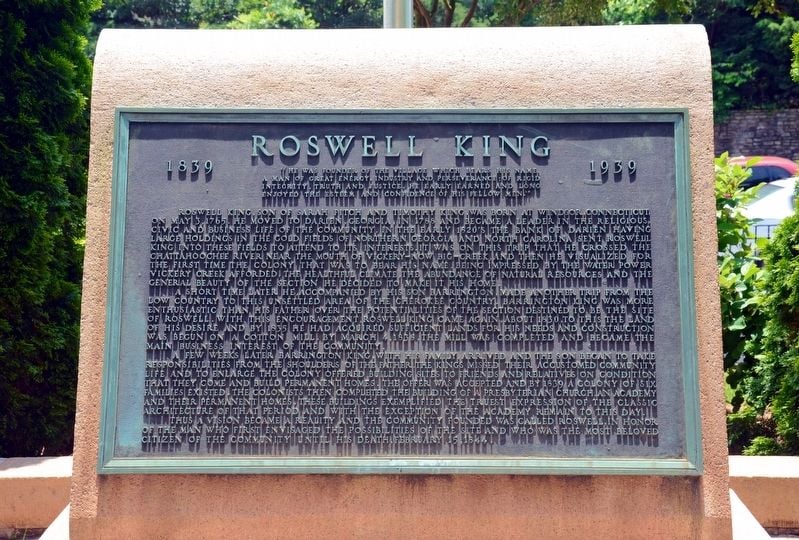
Roswell King was born on May 3, 1765, in Windsor, Connecticut, the son of Timothy King, an accomplished weaver and naval commander during the Revolutionary War, and Sarah Fitch King. Growing up in the industrious environment of New England, young Roswell absorbed the values of enterprise, efficiency, and determination that would define his long and eventful life.
At just fifteen years old in 1780, Roswell participated in the Revolutionary War as part of the naval resistance. This early experience shaped his character and instilled in him a sense of adventure that would eventually lead him far from his Connecticut roots. In 1780, at the age of fifteen, he made a momentous decision that would change the trajectory of his life—he moved to Darien, Georgia, in the Low Country and began working in the construction business.
Building a Reputation in Coastal Georgia
In Darien, King quickly established himself as skilled in construction, building houses and commercial structures and applying his expertise in the use of tabby, a regional cement-like building material. His talents caught the attention of prominent planters, and he even assisted planter Thomas Spalding in the construction of his mansion on Sapelo Island.
King not only became a landowner and commission broker dealing in cotton, rice, and lumber but also served as a surveyor, justice of the peace, and member of the Georgia House of Representatives. He married Catherine Barrington, daughter of a prominent family whose plantation at Seville Bluff on the Altamaha River had been the site of Fort Barrington before the Revolutionary War.
King eventually became manager of Major Pierce Butler’s extensive rice and cotton plantations on Butler Island and Hampton Point on St. Simons Island, positions he held until 1820. These plantations were massive operations, covering hundreds of acres and employing 500 enslaved workers. As plantation manager, King was known for his efficiency and rigorous management style, though this approach sometimes created tension with Butler, who preferred more moderate methods.
During the War of 1812, disaster struck the Butler plantations. Butler lost 138 enslaved laborers valued at more than $60,000 to the British, who shipped them first to Bermuda and then to Halifax, Nova Scotia. Roswell King, along with plantation owners Thomas Spalding and John Couper, sailed to Bermuda in an abortive attempt to persuade the emancipated laborers to return. Butler blamed King for this loss, and their relationship soured. In 1820, King resigned his position and joined the Bank of Darien as a director. His son Roswell Jr. assumed the management of the Butler plantations and remained in that capacity until 1838.
The Discovery That Changed Everything
The turning point in Roswell King’s life came in 1830, when he was already in his mid-sixties—an age when most men of his era were settling into retirement. Around 1830, while on an investigative trip for the Bank of Darien to the area in north Georgia where gold had been discovered, King came upon the confluence of the Chattahoochee River and Vickery Creek (then known as Big Creek), and saw the power potential of the rushing waters.
The discovery of gold in Cherokee territory in 1828 had sparked Georgia’s first gold rush, drawing prospectors and speculators to the mountainous regions near Dahlonega and Auraria. King, traveling on horseback and following Indian trails, discovered vast forests and the rushing waters of Vickery Creek. As an experienced businessman and industrialist, he immediately recognized something others had missed—the tremendous potential for water-powered industry.
King bought Cherokee Nation acreage from white winners in a land lottery. This land acquisition occurred during a dark period in Georgia history, as the state had declared the Cherokee Nation illegal and divided their lands among white settlers through a lottery system, setting the stage for what would become the Trail of Tears in 1838.
Building a Dream in the Wilderness
In the mid-1830s, King returned to pursue his dream. Two of his sons, Barrington and Ralph, came with him to begin work on a mill complex. King brought with him 36 enslaved Africans from his own coastal plantation, plus another 42 skilled enslaved carpenters bought in Savannah to build the mills. These enslaved workers constructed not just the mills, but the entire infrastructure of the new settlement—houses, mill worker apartments, and all supporting buildings.
The vision was ambitious: to create a self-contained industrial community that combined cotton production with cotton processing. The recent invention of the cotton gin had made short-staple cotton profitable in Georgia’s uplands, and King saw the opportunity to revolutionize the textile industry by locating mills near the cotton fields themselves, powered by the rushing waters of Vickery Creek.
King began work on the first cotton mill in 1838, and in 1839 it was incorporated as The Roswell Manufacturing Company. King’s son Barrington served as the company president, and the cotton mill soon became the largest in north Georgia.
Creating a Colony of Coastal Aristocracy
But Roswell King’s vision extended beyond mere industrial enterprise. He missed the refined society of coastal Georgia and wanted to recreate that cultured community in the wilderness of north Georgia. Five other coastal families, including those of his daughters Catherine King Pratt and Eliza King Hand, joined him and his sons in their business endeavors.
The Kings and five other coastal families—the Bullochs, Dunwodys, Lewises, Pratts, and Smiths—built elegant mansions, a town square, a company store, a mill village, a Presbyterian church, and an academy. King offered homesites and investment opportunities to his wealthy friends and business associates, creating what they called “the Colony.”
Among these founding families was James Stephens Bulloch, a prominent businessman who would build the magnificent Bulloch Hall in 1839. His family would later gain historical significance when his granddaughter, Martha “Mittie” Bulloch, married Theodore Roosevelt Sr. at Bulloch Hall in 1853, making her the mother of President Theodore Roosevelt.
Barrington King, co-founder of Roswell with his father, selected the highest point in Roswell for his home, Barrington Hall, which was designed in the Greek Revival style of architecture by Willis Ball, a carpenter from Connecticut. The construction took five years—two years for cutting and seasoning the virgin timber and three years for building—and the mansion was completed in 1842.
The town’s layout reflected King’s New England roots, with wide streets and a park at its center. The Kings gave building sites for the Presbyterian and Methodist churches and for the Academy. This careful planning created an unusually refined settlement for the Georgia frontier—a planned community that blended industrial ambition with social sophistication.
Life in Early Roswell
The new settlement quickly developed distinct social classes that would define its character for generations. The founders introduced two population classes, the wealthy elite and mill workers, and added considerably to the scant number of enslaved people in the area.
Orders for cloth, tenting, rope, flannels, and yarn poured in from the Roswell Manufacturing Company. The mill operated with remarkable efficiency, and the company expanded rapidly. Even a flouring mill was constructed to diversify the community’s industrial base.
Mill workers often labored 11-hour days, living in modest cottages and apartments built specifically for them near the mill complex. Meanwhile, the founding families lived in their elegant Greek Revival mansions on the hills overlooking the operation, maintaining the lifestyle and social traditions they had known on the coast.
The town also maintained connections with the Cherokee who had once inhabited the land. For a while there was a tolerance of each other. James Dorris and his Indian wife, Nancy Cook, operated a trading post that traded with both whites and Native Americans. Lebanon Baptist Church Mission Society served the Indian missions. Sharlot Vickery, a Cherokee married to a white settler, was part-owner of two farms and a ferry on the Chattahoochee.
Personal Tragedies and Legacy
Despite the success of his enterprise, Roswell King experienced profound personal loss during these triumphant years. King’s wife Catherine died in 1839, never seeing the town that would bear her husband’s name. Before Roswell King’s wife, Catherine, could move from Darien, she died, never seeing the town that would be named for her husband. After becoming a widower, King moved into a colonial-style home he called Primrose Cottage in 1839, sharing it with his recently widowed daughter Eliza King Hand and her children.
King himself died on February 15, 1844, at the age of seventy-nine, having lived just five years in the community he had created. He was buried in Roswell, a decade before his namesake town was officially incorporated in 1854.
His son Barrington carried on his father’s legacy with dedication and vigor. Barrington King served as president of the Roswell Manufacturing Company for twenty-seven years, from its incorporation in 1839 until his death in 1866. Under his leadership, by 1860 the Roswell Manufacturing Company had tripled its capital and doubled the size of the mill complex and the number of employees, producing cotton cloth, yarn, rope, and tenting as the largest cotton mill in north Georgia.
The Town That Grew From a Dream
The town of Roswell officially incorporated on February 16, 1854, ten years after its founder’s death. By then, the community had firmly established itself as a center of textile manufacturing and refined southern society.
The Civil War would bring tremendous upheaval. In July 1864, Union forces under General Kenner Garrard occupied Roswell and, under General Sherman’s orders, burned the mills and sent the mill workers north to prevent them from supporting the Confederate war effort. Yet the elegant mansions largely survived because Union officers used them as headquarters.
After the war, Barrington King rebuilt the mills, and production resumed. With expansions and additions, the textile mills operated for more than a hundred years, and what was King’s little village grew to become one of the ten largest cities in the state.
A Complex Legacy
Roswell King’s legacy is one of remarkable vision and entrepreneurial success, but it must be understood within the full context of his time. King was a slave owner who managed plantations with 500 enslaved workers and was known for harsh management practices. The town he founded was built by enslaved labor, and slavery was integral to both the cotton production and the mill operations that made the community prosperous.
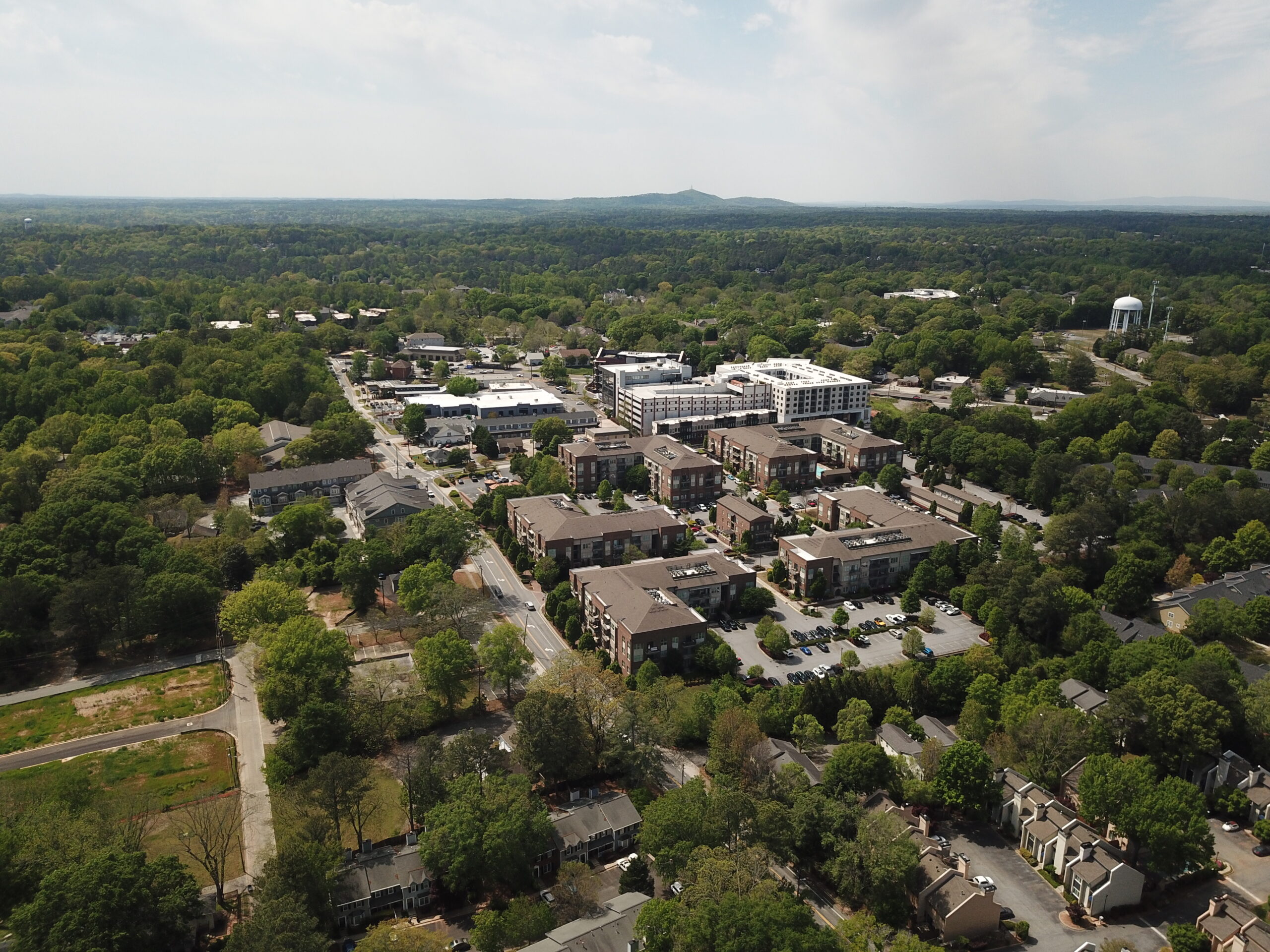
Today, the city of Roswell preserves much of its founder’s architectural legacy. Barrington Hall, Bulloch Hall, and other antebellum homes stand as testaments to the ambitions of those coastal families who ventured into north Georgia wilderness. The ruins of the original mill complex remain along Vickery Creek, silent witnesses to the industrial vision that launched a city.
Roswell King’s story is quintessentially American—a tale of ambition, enterprise, and reinvention. A Connecticut boy who became a Georgia planter, a Revolutionary War naval participant who became a banker and industrialist, a man who, in his seventies, looked at a rushing creek in the wilderness and envisioned a thriving town. His vision succeeded beyond what he could have imagined, creating a community that would eventually become one of Georgia’s largest and most affluent cities, though built upon a foundation that included both remarkable entrepreneurship and the exploitation inherent in the antebellum South.
The town that bears his name stands today not just as a monument to his vision, but as a complex historical site where we can examine both the achievements and the moral compromises of America’s past. In understanding Roswell King and the founding of Roswell, Georgia, we gain insight into the ambitions, contradictions, and ultimately the full humanity of our history.