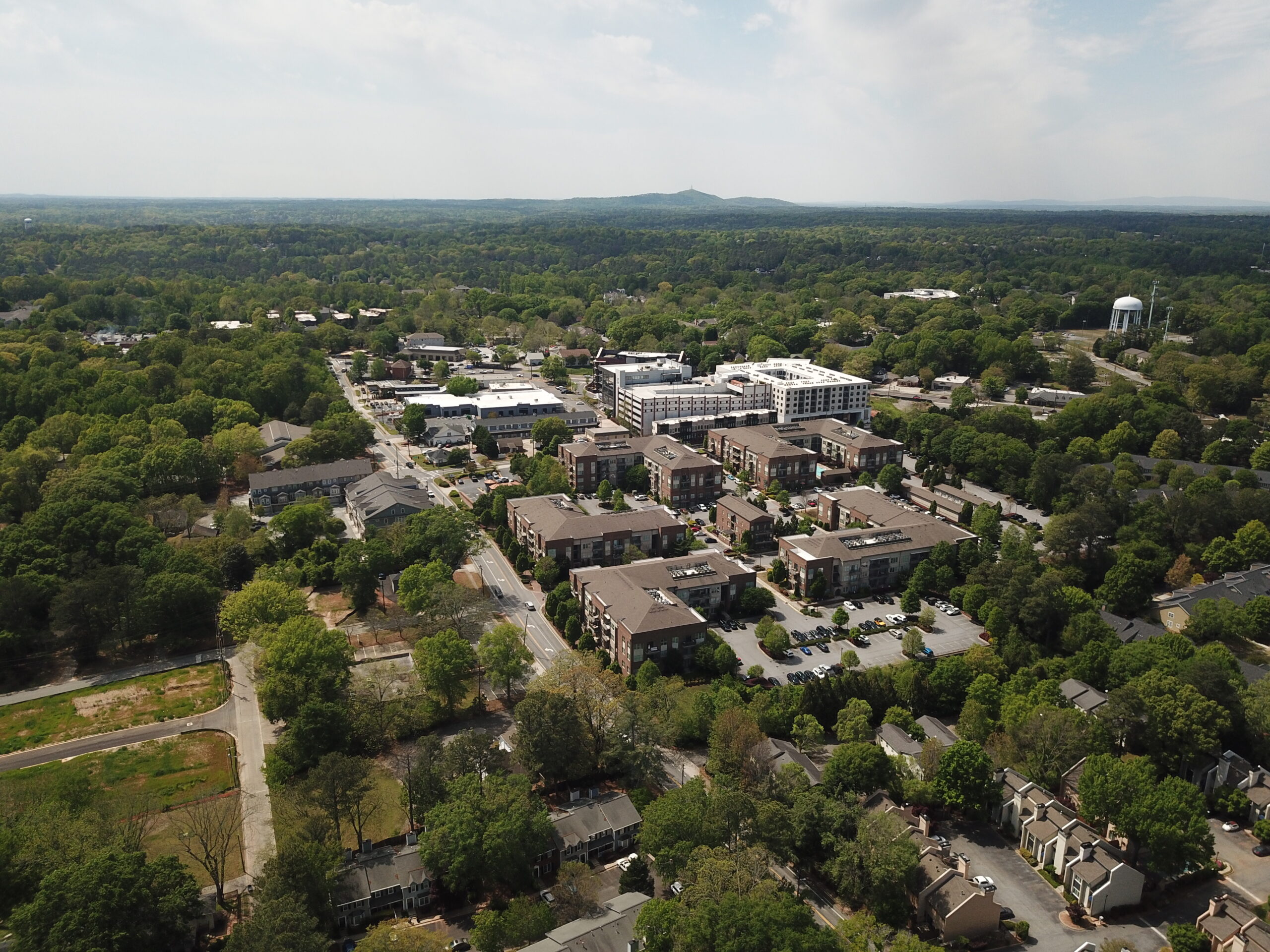


A deep-dive comparison of housing costs, property taxes, schools, commutes, and daily expenses across four of Atlanta’s most coveted suburbs — so you can make the move with confidence.
By Roswell Pulse Editorial Staff•Updated April 2026•15-minute read
If you’re relocating to the Atlanta area, you’ve almost certainly encountered these four names on your shortlist: Roswell, Alpharetta, Sandy Springs, and Marietta. All four rank consistently among Georgia’s best places to live. All four offer top-tier schools, low crime, and easy highway access to Atlanta’s job centers. And all four will require a serious look at your budget before you commit.
But here’s the thing — they’re not interchangeable. The difference between buying in Marietta versus Alpharetta could be $200,000 on the same square footage. Annual property tax bills can swing by $2,000+ depending on which side of a county line you land on. And the lifestyle experiences range from urban-adjacent Perimeter corridor living to river-town historic charm.
This guide uses 2025–2026 market data from Zillow, Redfin, Fulton and Cobb County tax records, MIT’s Living Wage Calculator, and local MLS reporting to give you the clearest possible comparison. We’ve kept it factual, specific, and actionable — because you’re making one of the biggest financial decisions of your life.
✓ Who This Guide Is For
This article is written for people actively comparing these four cities during a relocation decision — whether you’re moving for work, upgrading your home, or relocating your family to a top-tier school district. We cover both renters and buyers.
1. The Big Picture: A Snapshot Comparison
Before diving into the details, here’s where each city lands at a glance. These figures represent typical home values, median household incomes, and overall cost-of-living positioning as of early 2026.
★ This City
North Fulton County
Roswell
~$555K
Typical home value (Zillow, Feb 2026)
North Fulton County
Alpharetta
~$656K
Typical home value (Zillow, Feb 2026)
South Fulton County
Sandy Springs
~$632K
Typical home value (Zillow, Feb 2026)
Cobb County
Marietta
~$453K
Typical home value (Zillow, Feb 2026)
Right away, the spread is significant. Marietta offers the lowest entry point by a wide margin — roughly $100K–$200K less than the Fulton County trio. Alpharetta carries the highest price tag, reflecting its tech-economy employer density, newer housing stock, and luxury branding in the Atlanta market. Roswell sits in the middle and, as we’ll explore, delivers arguably the best combination of historic character, outdoor access, and relative value in north Fulton County.
Overall Cost-of-Living Index vs. National Average (2026)
City scoreU.S. average (100)
2. Housing & Real Estate: Where Your Down Payment Goes
Housing is typically 30–40% of a household budget, making it the single most important number in any cost-of-living comparison. Here’s what you need to know about each market as of early 2026.
Roswell
Roswell’s housing market remains competitive but has stabilized after the frenzied post-pandemic run-up. The typical home value sits around $555,000, with a median sale price near $535,000 as of mid-2025. Homes here skew older — many in the 1980s to early 2000s range — with a mix of Colonial, Craftsman, and contemporary builds. You’ll find genuine walkable neighborhoods near Historic Downtown, as well as sprawling golf-course communities like Horseshoe Bend and Brookfield Country Club. Homes are spending roughly 50–60 days on market, indicating a balanced but still-competitive environment.
For a $535,000 purchase with 20% down and a 30-year fixed mortgage at approximately 6.75% (the prevailing rate range in early 2026), expect a principal-and-interest payment of roughly $2,780/month before taxes and insurance.
Alpharetta
Alpharetta carries the highest price point of the four cities, with typical home values around $656,000, though Redfin pegged the median sale price at $712K as recently as January 2026. The city’s housing is newer on average and frequently includes desirable amenities: open floor plans, neighborhood swim/tennis, and proximity to the tech corridor along GA-400. The Avalon mixed-use development has further elevated Alpharetta’s luxury brand positioning. Average days on market have stretched to 68–71 days, suggesting buyers now have a bit more negotiating room than they did in 2022–2023.
Budget accordingly: a $700,000 purchase at 20% down translates to roughly $3,640/month in P&I alone.
Sandy Springs
Sandy Springs is Atlanta’s urban-suburban crossover — close to Perimeter Center’s Fortune 500 cluster, directly on GA-400, and connected to MARTA’s rail system. Zillow places typical home values at $632,000, with Redfin reporting a median sale price near $697K in September 2025. Sandy Springs has seen some of the strongest recent appreciation among the four cities — a 19% year-over-year jump as of late 2025 — driven by Perimeter employment and inventory tightness. The housing mix includes townhomes and condos near the Perimeter, alongside larger single-family homes in neighborhoods like Chastain Park-adjacent areas and the Riverside Drive corridor.
Marietta
Marietta is where buyers get the most square footage per dollar. Zillow’s typical home value is $453,000, with Redfin’s median sale at $441K in late 2025. That’s a meaningful $100,000–$200,000 discount compared to Roswell and the other north Fulton options. Marietta offers historic charm centered on Marietta Square — a walkable, restaurant-and-brewery-lined downtown that rivals anything in the suburbs. Cobb County’s more affordable land prices mean you can often find a 2,500+ square foot home under $450,000 that would run $600,000+ in Roswell or Alpharetta. Homes are moving in roughly 37 days on market, a sign of genuine demand.
| Metric | Roswell | Alpharetta | Sandy Springs | Marietta |
|---|---|---|---|---|
| Typical Home Value (Zillow) | ~$555K | ~$656K | ~$632K | ~$453K |
| Median Sale Price (Redfin/MLS) | ~$535K | ~$712K | ~$697K | ~$441K |
| YOY Price Change | -3.5% | +2.6% | +1.4% | +2.5% |
| Avg. Days on Market | 51–60 days | 68–71 days | 47–53 days | 37 days |
| Est. Monthly P&I (20% down, 6.75%) | ~$2,780 | ~$3,640 | ~$3,510 | ~$2,290 |
| County | Fulton | Fulton | Fulton | Cobb |
🏠
Best Value for Buyers: Marietta — Best Value-Plus-Character: Roswell
If raw square footage per dollar is your priority, Marietta wins decisively. If you want the combination of historic walkability, Chattahoochee River access, and top-tier schools without reaching into Alpharetta territory, Roswell represents the sweet spot in north Fulton.
3. Renting: What the Apartment Market Looks Like in 2026
Not everyone is buying. Whether you’re new to the area and want to try a city before committing, or you’re simply priced out of homeownership in this rate environment, here’s how the rental markets compare.
| Apartment Type | Roswell | Alpharetta | Sandy Springs | Marietta |
|---|---|---|---|---|
| Studio | ~$1,350 | ~$1,450 | ~$1,490 | ~$1,250 |
| 1 Bedroom | ~$1,550 | ~$1,650 | ~$1,680 | ~$1,450 |
| 2 Bedroom | ~$1,950 | ~$2,100 | ~$2,080 | ~$1,750 |
| 3 Bedroom | ~$2,400 | ~$2,650 | ~$2,840 | ~$2,100 |
| YOY Rent Change | +4–5% | +3–4% | -2% to +2% | +2–3% |
Roswell’s rental market has seen moderate upward pressure, particularly along the Holcomb Bridge Road corridor and near the Historic District, where newer apartment communities with resort-style amenities command premium rents. Sandy Springs, despite its high home values, has seen some rental softening as new luxury apartment inventory came online near the Perimeter. This creates an interesting dynamic: Sandy Springs can actually be competitive for renters even as it becomes increasingly expensive for buyers.
Marietta remains the most affordable rental market of the four, especially for families needing three-bedroom space. A family renting a 3BR in Marietta can save $300–$750/month compared to the same footprint in Alpharetta or Sandy Springs — that’s $3,600 to $9,000 per year in pure rent savings.
✓ Renter’s Tip
In all four cities, rental prices are meaningfully higher near transit corridors, mixed-use town centers, and top-rated elementary school zones. If schools are your priority, expect to pay a 10–20% premium on rent for proximity to the most sought-after attendance zones.
4. Property Taxes: The Hidden Monthly Cost That Surprises New Residents
Property taxes are one of the most frequently overlooked costs when people relocate to metro Atlanta — and one of the biggest differentiators between these four cities. The key fact to understand upfront: Roswell, Alpharetta, and Sandy Springs are all in Fulton County, while Marietta is in Cobb County. This single county line creates a meaningful tax gap.
How Georgia Property Taxes Work
Georgia assesses property at 40% of its fair market value. Millage rates (taxes per $1,000 of assessed value) are then applied by the county, school district, and city government separately. Homestead exemptions reduce the taxable base for primary residences. The result is a combined effective tax rate that varies significantly by location.
| Tax Component | Roswell (Fulton) | Alpharetta (Fulton) | Sandy Springs (Fulton) | Marietta (Cobb) |
|---|---|---|---|---|
| County Effective Rate | ~1.05–1.16% | ~1.05–1.16% | ~1.05–1.16% | ~0.86% |
| County Millage (General Fund) | 8.87 mills | 8.87 mills | 8.87 mills | Lower (Cobb) |
| Est. Annual Tax on $535K Home | ~$5,600 | ~$6,900 (on $700K) | ~$6,600 (on $632K) | ~$3,900 |
| Est. Monthly Tax Escrow | ~$467 | ~$575 | ~$550 | ~$325 |
| Homestead Exemption (Basic) | $30,000 off assessed value | $30,000 off assessed value | $30,000 off assessed value | $10,000 off assessed value |
Fulton County’s general fund millage rate has remained steady at 8.87 mills for four consecutive years through 2025, providing some predictability. However, Fulton County’s effective rate of approximately 1.05–1.16% is notably higher than Cobb County’s 0.86%. On a $535,000 Roswell home versus a comparably priced Marietta home, that rate differential means roughly $1,000–$1,700 more per year in property taxes paid to the Fulton County side.
It’s also important to understand that even when millage rates stay flat, rising assessed values mean your actual tax bill increases. Fulton County properties saw an effective 3.74% tax increase in 2024 despite no millage rate change, purely due to appreciation. This is a real ongoing cost that buyers in all three Fulton County cities should factor into their long-term housing budget.
⚠ Important Note for Fulton County Buyers
Fulton County offers a floating homestead exemption that limits annual increases in your taxable base to the lesser of CPI or 3%. This protection only applies after your homestead exemption is filed and approved. If you’re buying in Roswell, Alpharetta, or Sandy Springs, file your homestead exemption immediately after closing — don’t wait.
💵
Property Tax Winner: Marietta (Cobb County)
Cobb County’s lower effective tax rate saves Marietta homeowners $1,000–$2,000+ per year versus comparable properties in Fulton County cities. Over a 10-year ownership period, that’s $10,000–$20,000 in cumulative savings — before accounting for further appreciation.
5. Groceries, Utilities & Daily Living Expenses
Once you’ve settled the housing question, the day-to-day cost of living across these four cities converges considerably. All four are part of the Atlanta-Sandy Springs-Roswell metro area, share the same grocery chains and restaurant brands, and operate under Georgia’s same utility pricing framework. That said, there are some meaningful differences worth knowing.
Groceries
Grocery costs are essentially uniform across all four cities. Feeding a family of four in any of these communities runs approximately $800–$1,050 per month, in line with the Atlanta metro average. All four cities have access to a full range of options — from Kroger and Publix to Whole Foods, Trader Joe’s, Costco, and Aldi — so budget-conscious shoppers have real choices regardless of where they land.
Roswell residents overall spend slightly less on everyday goods than Alpharetta households — roughly $500–$1,000 less per year on non-housing daily expenses according to IndexYard research — largely because Alpharetta’s retail corridors trend slightly more premium. The difference is real but not dramatic.
Utilities
Georgia Power serves the majority of residential customers across all four cities. Expect monthly utility bills (electricity, gas, water/sewer, trash) of approximately $200–$280 for a typical 2–3 bedroom home. Summer months drive this higher due to Georgia’s intense cooling demands — plan for $50–$100 more in July and August. Winter heating bumps are less severe than cooling costs given Atlanta’s mild winters.
| Daily Expense Category | Roswell | Alpharetta | Sandy Springs | Marietta |
|---|---|---|---|---|
| Monthly Groceries (Family of 4) | $850–$1,000 | $875–$1,050 | $850–$1,050 | $820–$980 |
| Monthly Utilities (2–3BR home) | $210–$260 | $210–$270 | $220–$280 | $200–$255 |
| Gas (per gallon, avg. early 2026) | ~$2.80 | ~$2.80 | ~$2.85 | ~$2.75 |
| Typical Restaurant Dinner (2 people) | $55–$80 | $65–$95 | $65–$100 | $45–$75 |
| Gym Membership (monthly) | $35–$80 | $40–$90 | $40–$90 | $30–$75 |
| HOA Fees (where applicable) | $200–$400/mo | $250–$500/mo | $200–$450/mo | $150–$350/mo |
Alpharetta and Sandy Springs skew slightly more expensive for dining out and entertainment, reflecting the presence of premium restaurant corridors (Alpharetta’s Avalon, Sandy Springs’ Perimeter area). Marietta’s Marietta Square dining scene has been growing rapidly and now rivals the others on quality, while still offering better value on average. Roswell’s Canton Street dining corridor is one of the best-kept secrets in Atlanta — excellent quality at prices that typically undercut comparable Sandy Springs or Alpharetta establishments.
✓ The Real Daily Cost Difference
For most households, non-housing daily expenses differ by less than $100–$150/month between these four cities. The big numbers are in housing and property taxes — that’s where you’ll feel the real difference in your annual budget. Don’t let restaurant prices or grocery costs be the deciding factor.
6. Schools & Education: What Parents Need to Know
School quality is a dominant factor for families comparing these four suburbs — and it’s more nuanced than simply looking at district ratings. Here’s what the data shows.
Roswell: Fulton County Schools
Roswell is served by Fulton County Schools, one of the largest districts in Georgia. School quality within Roswell varies significantly by neighborhood — the northern Roswell and Crabapple corridor feeds into some of the highest-rated elementary and middle schools in the district, including Crabapple Middle and Roswell High School. Roswell High School is consistently recognized as a top-performing school in Georgia. Residents in southern Roswell may be zoned to different schools with varying profiles, so checking specific attendance zones for a target address is essential before you buy.
Alpharetta: Fulton County Schools
Alpharetta is also served by Fulton County Schools, and benefits from some of the district’s strongest campuses. Alpharetta High School ranks among the top 20 high schools in Georgia according to U.S. News & World Report. The northern portion of Alpharetta can also feed into Milton High School. The city’s newer residential developments are often deliberately marketed around school zone premium — and that’s reflected in pricing. You’re paying a real premium for the best AHS and Milton feeder patterns.
Sandy Springs: Fulton County & Atlanta Public Schools
Sandy Springs has a more complex school picture. Parts of Sandy Springs are served by Fulton County Schools, including North Springs Charter High School — one of the most selective and highly regarded high schools in the state. Other parts of Sandy Springs fall within Atlanta Public Schools, which are generally lower-rated. Buyers must verify the school system for any specific address, as the APS/FCS boundary can run through subdivisions. This is a meaningful risk for families who don’t check carefully.
North Springs High School and Riverwood International Charter School are genuine destination schools that draw families specifically to Sandy Springs. But they’re oversubscribed, and charter admission is not guaranteed by address.
Marietta: Marietta City Schools & Cobb County Schools
Marietta addresses are served by either Marietta City Schools or Cobb County School District depending on location — one of the best-regarded suburban districts in Georgia. Cobb County schools, particularly in East Cobb/Marietta, routinely earn high ratings. Notable schools include Walton High School, Lassiter High School, and Dickerson Middle School — all highly competitive. Marietta City Schools have been improving on Georgia’s CCRPI metrics and serve the city’s more urban core.
| School Factor | Roswell | Alpharetta | Sandy Springs | Marietta |
|---|---|---|---|---|
| School District(s) | Fulton County | Fulton County | Fulton / APS (varies) | Marietta City / Cobb Co. |
| GreatSchools Avg. Rating (city) | 6–8/10 | 7–9/10 | 5–9/10 (wide range) | 6–8/10 |
| Standout High School | Roswell High School | Alpharetta High / Milton | North Springs Charter | Walton / Lassiter (Cobb) |
| School Consistency by Zone | High (northern zones) | Very High | Variable — check address | High (East Cobb zones) |
| Risk of APS Zones | None | None | Yes — southern SS | None |
⚠ Sandy Springs Buyers: Verify Before You Commit
Sandy Springs has the highest school-zone variability of the four cities. A home on one side of a street can be APS; the other side, Fulton County Schools. Never assume based on a neighborhood name or zip code — use the Fulton County Schools zone-finder tool to confirm the assigned school for the exact property address you’re considering.
7. Commute & Transportation
All four cities are within the Atlanta metro commute shed, but their relationship to Atlanta’s job centers, highways, and transit options differs meaningfully. This matters not just for time, but for transportation costs and quality of life.
Roswell
Roswell sits roughly 25–30 miles north of downtown Atlanta, with primary access via GA-400. Commute times to downtown Atlanta typically run 30–45 minutes outside rush hour and 45–70+ minutes during peak traffic. Roswell has MARTA bus connections that link to the North Springs rail station — a solid option for commuters heading into the Midtown and Buckhead office corridors. The North Fulton cluster of employers (including many tech and healthcare firms on the GA-400 corridor) means many Roswell residents have very short commutes — under 15 minutes — to their workplace.
Alpharetta
Alpharetta is Atlanta’s tech suburb, with a dense concentration of corporate campuses directly on and near GA-400 between exits 9 and 12. For residents who work in Alpharetta or nearby, the commute is minimal. For commuters heading to Atlanta proper, expect 30–45 minutes to Midtown/downtown under normal conditions — comparable to Roswell but with slightly more distance to cover. Alpharetta is served by the North Springs MARTA station via express bus connections.
Sandy Springs
Sandy Springs has the best transit access of the four cities. The Sandy Springs MARTA station sits directly within the city, connecting residents to downtown, Midtown, and Buckhead without touching I-285 traffic. Perimeter Center’s major employers are often accessible on foot or by short Uber from Sandy Springs addresses. Highway commuters have access to both GA-400 and I-285. Commute times to downtown Atlanta run roughly 15–30 minutes under normal conditions — the shortest of the four cities.
Marietta
Marietta sits northwest of Atlanta, with I-75 as the primary artery. Commute times to downtown Atlanta are typically 30–45 minutes, though the I-75 corridor can experience heavy delays during peak commuting hours in both directions. CobbLinc bus service and MARTA bus connections are available for public transit users. Marietta’s location works well for commuters heading to the Cumberland/Galleria employment district (just 10–15 minutes away) and for those working along the I-75/I-285 interchange zone.
| Commute Factor | Roswell | Alpharetta | Sandy Springs | Marietta |
|---|---|---|---|---|
| Miles to Downtown Atlanta | ~25 mi | ~28 mi | ~15 mi | ~20 mi |
| Avg. Commute Time (off-peak) | 30–45 min | 30–45 min | 15–30 min | 30–45 min |
| MARTA Rail Access | Bus to North Springs | Bus to North Springs | Direct rail station | CobbLinc / bus |
| Highway Served | GA-400 | GA-400 | GA-400 / I-285 | I-75 / I-285 |
| Best For Remote/Hybrid Workers | ✓ Excellent | ✓ Excellent | ✓ Excellent | ✓ Very Good |
🚌
Commute Winner: Sandy Springs — Best Value-Commute Combo: Roswell
Sandy Springs wins on pure commute proximity and transit access. But for families who aren’t daily in-office Atlanta commuters, Roswell offers the best combination of proximity, GA-400 access, and livability — without Sandy Springs’ premium price tag.
8. Lifestyle, Amenities & Community Character
Beyond the spreadsheet, each of these cities delivers a meaningfully different day-to-day experience. Here’s where the “feel” of each place becomes important — especially for families making a 5–10 year commitment.
Roswell: Historic Charm + Nature Access
Roswell is genuinely unique in the Atlanta metro for its combination of authentic historic identity and outdoor recreation. The Historic Downtown / Canton Street corridor is one of the most vibrant walkable dining and entertainment districts in any Atlanta suburb — with independent restaurants, breweries, and boutiques that have cultivated real community around them. The Chattahoochee River National Recreation Area runs along Roswell’s western and southern border, providing world-class trail access, kayaking, fishing, and paddle boarding within minutes of most neighborhoods. Roswell’s city calendar is full: the Shakespeare Festival, the Art in the Park series, the Roswell Music Festival, and community events centered on Roswell Mill draw residents into shared experiences in a way that feels organically earned rather than developer-manufactured.
Alpharetta: Modern, Polished, Tech-Forward
Alpharetta has built itself into a lifestyle brand. The Avalon mixed-use development is the jewel of its retail and entertainment scene — a walkable “town center” with upscale dining, boutique retail, a hotel, and amphitheater events. Alpharetta’s tech-cluster employment base draws a highly educated, affluent population that has created a dense ecosystem of premium services, fitness studios, and high-end restaurants. The feel is newer, shinier, and more manicured than Roswell. It’s also undeniably convenient if your employer is on the GA-400 corridor.
Sandy Springs: Urban-Adjacent Sophistication
Sandy Springs is for residents who want suburban amenities but maintain strong pull toward Atlanta’s urban offerings. Its location adjacent to Buckhead, proximity to Perimeter Center, and MARTA access mean residents can easily tap the full energy of the city without living in it. The Hammond Park area, Chastain Park, and Morgan Falls Overlook offer excellent outdoor options including one of metro Atlanta’s finest disc golf and trail systems along the Chattahoochee. The dining and nightlife options lean more cosmopolitan than the other three cities.
Marietta: Small-Town Authenticity at Scale
Marietta Square is a legitimately beloved civic center — brick-paved streets, an active community theater, year-round festivals (Taste of Marietta, Art in the Park), and a deep independent restaurant and brewery scene. Marietta’s historic identity runs deeper than any manufactured town center. The Kennesaw Mountain National Battlefield Park — nearly 3,000 acres of protected land with extensive trail networks — is one of the great outdoor amenities anywhere in the metro. Marietta has a stronger blue-collar-to-professional mix than the other three cities, lending it a community feel that many families find grounding after years in more stratified suburbs.
| Lifestyle Factor | Roswell | Alpharetta | Sandy Springs | Marietta |
|---|---|---|---|---|
| Walkable Town Center | ✓✓ Historic Downtown | ✓✓ Avalon | ✓ Perimeter area | ✓✓ Marietta Square |
| Major Outdoor Recreation | Chattahoochee River NRA | Greenway trails | Chattahoochee / Morgan Falls | Kennesaw Mtn Battlefield |
| Historic Character | High (1830s mill town) | Low (modern/planned) | Moderate | High (oldest city) |
| Niche Grade (Niche.com 2026) | A+ | A+ | A+ | A |
| Vibe Summary | Charming & outdoorsy | Sleek & corporate | Urban-suburban hybrid | Authentic & community-rooted |
9. Income, Job Market & What You Need to Earn
Cost of living is only meaningful in the context of what you’re earning. Here’s a look at the income landscape across these four markets.
Roswell’s median household income of approximately $122,924 (U.S. Census via IndexYard) is among the highest in Georgia and reflects the city’s concentration of white-collar professionals in healthcare, technology, finance, and corporate services. This strong income base is what supports Roswell’s elevated home prices — the local population can afford them.
Alpharetta’s median household income runs similarly high, driven by the density of tech-sector employment. Sandy Springs’ proximity to major corporate headquarters (Mercedes-Benz USA, UPS, Cox Enterprises are all within the Perimeter/Sandy Springs orbit) supports strong household incomes, particularly in the northern Fulton portion of the city.
Marietta’s household income is somewhat lower than the three north Fulton cities — reflecting both its broader population mix and the fact that Cobb County’s housing affordability attracts a wider economic range of residents. However, for buyers coming from high-income households, Marietta’s lower housing costs mean a larger percentage of income is available for savings, investment, or quality-of-life spending.
According to MIT’s Living Wage Calculator (updated February 2026 for the Atlanta-Sandy Springs-Roswell MSA), a single adult requires approximately $22–24/hour to cover basic needs in this metro. A family of four with two working adults needs each adult to earn roughly $35–38/hour to meet living expenses without financial stress. These figures apply broadly across all four cities.
✓ Rule of Thumb for Comfort
To buy comfortably in Roswell, most financial planners recommend a household income of at least $160,000–$180,000 given current home prices and interest rates. In Alpharetta, that number climbs to $200,000+. In Marietta, a household earning $130,000–$150,000 can live comfortably and build equity. Sandy Springs sits somewhere between Roswell and Alpharetta on this scale.
10. The Verdict: Which City Is Right for You?
There is no universal answer — the right city depends entirely on your priorities. But here’s how we’d frame the decision based on the data we’ve examined.
Our 2026 City-by-City Verdict
Based on housing costs, taxes, schools, commute, lifestyle, and overall value across the four cities.
★ Roswell
Best All-Around Value
The sweet spot for families who want strong schools, historic character, Chattahoochee outdoor access, and a vibrant dining scene — without reaching into Alpharetta price territory. Best for: families, outdoor enthusiasts, buyers in the $450K–$700K range.
Alpharetta
Best for Tech Workers & Luxury Buyers
Unmatched for proximity to the GA-400 tech corridor, newer housing, and polished amenities. The price premium is real and ongoing — but so is the lifestyle quality. Best for: dual-income tech households earning $200K+, buyers prioritizing school consistency.
Sandy Springs
Best for Atlanta-Tethered Professionals
Highest commute convenience, strongest MARTA access, Perimeter employment proximity. School due diligence is non-negotiable. Best for: professionals who commute to Atlanta frequently, empty nesters, buyers who prioritize transit and urban access.
Marietta
Best for Value & Square Footage
The most affordable market, lowest property taxes, genuine community character, and excellent East Cobb schools. The trade-off is highway commute dependency and slightly lower home appreciation potential. Best for: families on a budget, first-time buyers, buyers who work west of Atlanta.
The Bottom Line on Cost
If you’re making a purely financial comparison, the annual cost gap between these cities can exceed $15,000–$25,000 per year when you account for mortgage payments, property taxes, and HOA fees at the respective price points. That’s a meaningful number. Here’s a simple back-of-envelope comparison for a household buying at each city’s typical home price with 20% down:
| Annual Housing Cost Estimate | Roswell | Alpharetta | Sandy Springs | Marietta |
|---|---|---|---|---|
| Purchase Price Used | $535,000 | $700,000 | $632,000 | $450,000 |
| Annual P&I (6.75%, 30yr) | $33,360 | $43,680 | $39,480 | $27,480 |
| Est. Annual Property Tax | $5,600 | $7,350 | $6,640 | $3,870 |
| HOA (mid-range annual estimate) | $3,000 | $4,200 | $3,600 | $2,400 |
| Homeowners Insurance (est.) | $2,000 | $2,500 | $2,200 | $1,800 |
| Total Est. Annual Housing Cost | ~$43,960 | ~$57,730 | ~$51,920 | ~$35,550 |
| vs. Roswell (annual gap) | — | +$13,770/yr | +$7,960/yr | -$8,410/yr |
These estimates use mid-range HOA assumptions and general insurance benchmarks. Your actual costs will vary based on neighborhood, HOA structure, and insurance profile. But the directional message is clear: buying in Alpharetta costs roughly $13,000–$14,000 more per year than buying in Roswell, even before accounting for the higher purchase price and resulting down payment gap. Marietta buyers save roughly $8,000/year versus Roswell on the same basis.
Whether that gap is “worth it” depends entirely on your income, priorities, and how much weight you place on factors like school zone prestige, commute minutes, or architectural style. This guide gives you the numbers — the decision is yours to make.
✓ The Roswell Argument in Plain English
Roswell sits in a genuinely rare position: it’s the only city of the four that combines a real historic identity, Chattahoochee River outdoor access, a legitimate walkable town center, and home prices below Alpharetta and Sandy Springs. For buyers who don’t need the absolute closest proximity to Atlanta, it consistently delivers more character per dollar than any of its neighbors.
Final Thoughts: Do Your Homework Before You Move
No cost-of-living comparison can replace boots-on-the-ground research. If you’re seriously considering any of these four cities, we’d recommend spending at least one weekday and one weekend in each before making a decision. Drive the commute at rush hour. Walk the town center. Visit the schools. Talk to neighbors at the farmers market or coffee shop. Data tells you the framework — but living there tells you how it actually feels.
Roswell Pulse covers community news, events, business developments, and local life in Roswell, Georgia year-round. If you’re considering a move to Roswell and want to understand what daily life here actually looks like, browse our archives — we’ve been documenting this community for years.
If you’re making a move to any of these communities and need local digital services, business directory resources, or community connections, the Roswell Pulse network is here to help you get plugged in fast.
Planning a Move to Roswell?
Join 17,000+ members in the Roswell Georgia Community Facebook Group — the most active local community forum in the city. Ask questions, get recommendations, and connect with your future neighbors before you arrive. Join the Community
Sources & Methodology: Housing price data sourced from Zillow Home Value Index and Redfin MLS data (February 2026), Realtor.com FRED dataset (Atlanta-Sandy Springs-Roswell CBSA, February 2026). Property tax data sourced from Fulton County Board of Commissioners (2025 millage rate announcement), SmartAsset Georgia Property Tax Calculator, and JVM Lending Fulton County tax guide. Rental figures sourced from Zumper (March 2026), IndexYard Roswell Housing Breakdown (March 2026), and RentCafe market data. School ratings referenced from Niche.com (2026 rankings), U.S. News & World Report Best High Schools, and NextBurb comparative data. Commute estimates sourced from Tomo Mortgage Atlanta Suburbs report and U.S. Census mean commute time data. Living wage data from MIT Living Wage Calculator (updated February 2026, Atlanta-Sandy Springs-Roswell MSA). All cost estimates are for illustrative purposes and reflect mid-market conditions as of early 2026. Individual costs will vary based on specific property, lender, and personal circumstances. Roswell Pulse is not a licensed real estate or financial advisory service.
Published: April 2026 • Property: Roswell Pulse / Pulse Media Group, LLC • Category: Relocation & Cost of Living