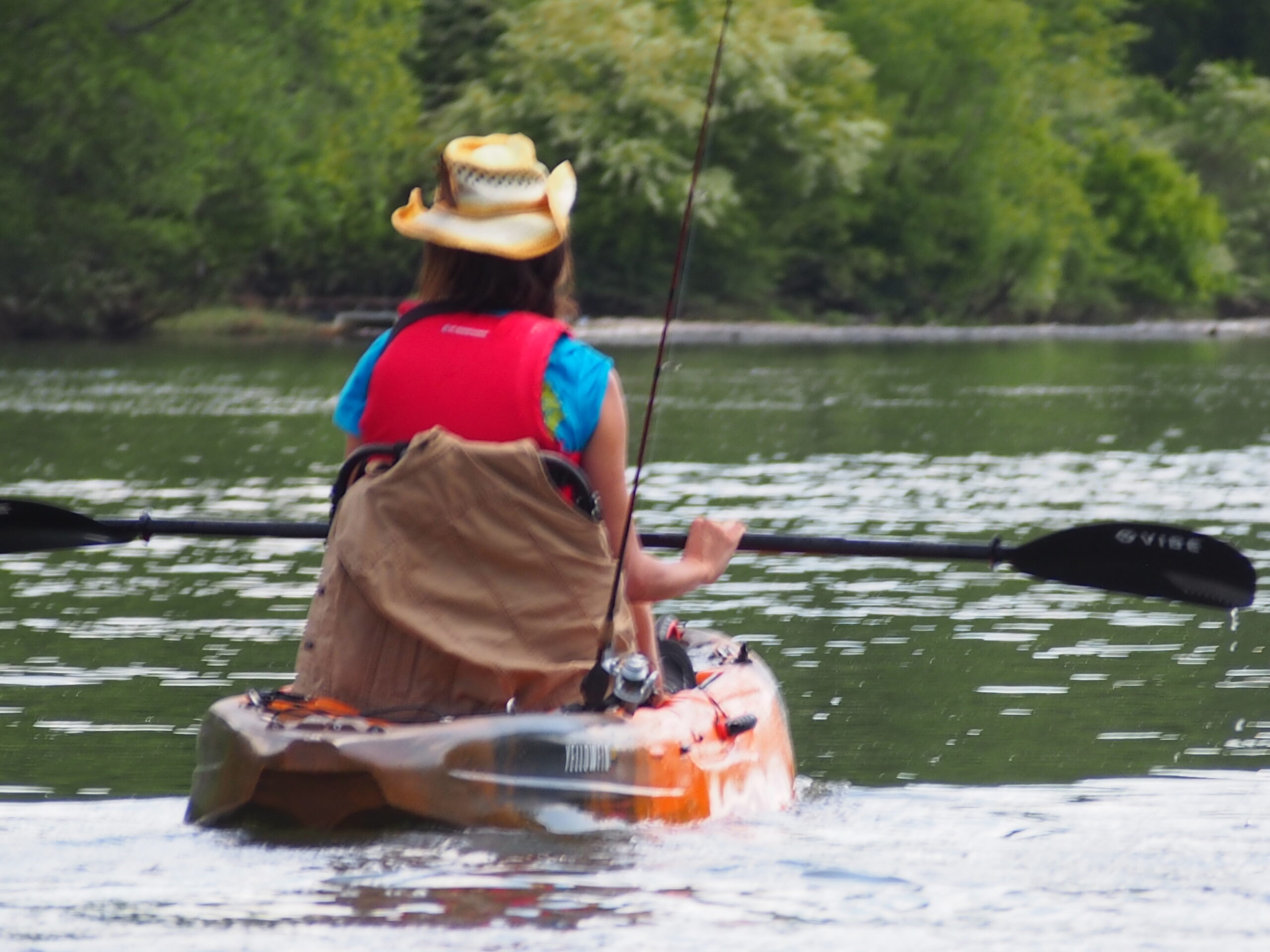

Roswell’s stretch of the Chattahoochee River has been getting shallower for years, and anyone who paddles, rows or fishes near Don White Memorial Park has felt it. Boats scrape bottom. Rowing shells lose their line. Anglers watch favorite holes fill in with sand. That changed this August, when the heavy equipment vessel Buddy Brown arrived on the river to kick off a $324,231 pilot dredging project aimed at digging the channel back out.
If you already track river conditions through the Roswell River Hub or plan trips around the Roswell Downtown Parking Wizard before a day on the water, this project is one you will want to bookmark. It is the first real infrastructure response to a sediment problem that local paddling and fishing groups, including Georgia Kayak Fishing, have talked about for years.
Understanding the Chattahoochee Dredging Project
Before getting into specifics, it helps to separate what this project is from what people sometimes assume it is.
This is not a flood control project, a dam operation change, or a full river restoration. It is a targeted pilot maintenance dredge of one bend of the river, sized and funded to prove out a process the City of Roswell can repeat annually if it works. The Chattahoochee naturally carries and deposits sediment, especially around bends and slower-moving stretches, and decades of that natural deposition (combined with upstream development and past sand mining operations) have left the water dangerously shallow in a few high-traffic recreation spots.
The City spent nearly four years on planning, engineering review, and permitting before a shovel or dredge pump touched the riverbed. That timeline matters for context: this is a heavily regulated, environmentally reviewed operation, not a quick contractor job. Understanding it as the first phase of a possible multi-year maintenance program, rather than a one-time fix, is the most accurate way to think about it.
At a Glance: Chattahoochee River Dredging Pilot Program
| Detail | Information |
|---|---|
| Project name | Chattahoochee River Dredging Pilot Maintenance Program |
| Location | Chattahoochee River near Don White Memorial Park, north of Saint Andrew Rowing Club |
| Dredge area | 600 feet long by 100 feet wide (about 1.4 acres) |
| Sediment goal | Approximately 12,000 cubic yards annually once fully operational |
| Initial contract value | $324,231 (not-to-exceed, for design, permitting and mobilization) |
| Contractor | River Sand, Inc. |
| Staging site | Former Ace Sand property, 705 Riverside Road |
| Timeline to active dredging | Roughly 30 to 60 days after mobilization |
| Optional extension | Up to four additional years of annual maintenance, subject to City approval and funding |
Figures current as of August 2026. Confirm against the City’s project page before resharing, since contract terms and timelines can shift as the pilot phase progresses.
Why the River Needed This
The shallow water problem is not new. Residents near Don White Memorial Park have described watching the river creep shallower year over year, to the point that stretches near the park and just downstream of the bridge interfere with paddling, rowing, and fishing at normal water levels. For a river corridor that is one of Roswell’s most-used outdoor amenities, that is a real problem, not a cosmetic one.
Recreation depends on consistent depth. Rowing shells need a clean, predictable channel to train safely. Paddleboarders and kayakers need enough water to clear submerged sandbars. Anglers lose access to holes and current breaks that used to hold fish once sediment fills them in. All three user groups converge on this same stretch of river, which is part of why the City prioritized it as the pilot site.
Public safety is part of the equation too. Shallower water changes how current behaves around obstructions and can complicate rescue and patrol operations. The City has framed the program as supporting recreation, community access, and public safety operations together, not recreation alone.
Where the Work Is Happening
The permitted dredge area sits in the Chattahoochee River just north of the Saint Andrew Rowing Club, adjacent to Don White Memorial Park on Riverside Road. That location is deliberate. It is one of the most heavily used access points on Roswell’s river corridor, with a canoe and kayak launch, fishing docks, and direct access to the Roswell Riverwalk Trail.
The actual dredging happens in the water, but the supporting operation runs from the former Ace Sand property at 705 Riverside Road. That 10.4-acre City-owned site, previously used for industrial sand operations decades ago, now hosts a temporary dewatering and staging area. Only about 0.69 acre of that property is approved for the land disturbance tied to processing, and the active work footprint is under one acre. In practical terms, dredged material gets pumped or hauled to the staging site, water is separated out, and the remaining sediment is trucked off the property.
The Buddy Brown and How the Dredging Process Works
The Buddy Brown is the heavy equipment vessel that mobilized to the site to begin operations, part of the hydraulic dredging system River Sand, Inc. is assembling at the Ace Sand staging area. Hydraulic dredging works by pumping a mix of water and sediment from the riverbed through a pipeline to a processing site, rather than scooping material out with a mechanical bucket. That approach is generally gentler on the surrounding riverbed and easier to control in a narrow, recreation-heavy channel like this one.
Mobilization comes first. Before any sediment moves, crews spend weeks delivering equipment, assembling the dredge system, and testing it at the staging area.
Active dredging follows 30 to 60 days later. Once the system is tested and launched, crews begin removing sediment from the permitted 600-by-100-foot section.
Truck traffic is part of the process. As dewatered sediment accumulates at the Ace Sand site, periodic truck trips will haul it away. The City has said it expects traffic impacts to be limited, but residents near Riverside Road may notice more truck activity than usual during active phases.
Project Timeline: From Mobilization to First Cuts
The path to this point took nearly four years. The City began procurement back in 2022 and spent the years since coordinating engineering, environmental review, and permitting across federal, state, and local agencies before it could authorize mobilization. River Sand, Inc. was selected through a competitive process to handle design, permitting, mobilization, and the dredging itself.
Contractor mobilization at the Ace Sand site began this summer, with equipment deliveries and crew assembly as the first visible sign of activity. From there, the City has said residents should expect active, in-water dredging to start roughly 30 to 60 days after mobilization wraps and the hydraulic system is tested and launched.
The Price Tag and What It Covers
Roswell City Council authorized an initial not-to-exceed contract of $324,231 with River Sand, Inc. That figure covers the pilot phase: project design, permitting, and mobilization for the first 1.4-acre dredge area near Don White Memorial Park.
Just as important is what the contract sets up beyond this pilot. The agreement includes an optional annual maintenance program that could extend up to four additional years, contingent on future City Council authorization and available funding. If the pilot proves the concept works and removes sediment efficiently, the City has a built-in path to keep dredging roughly 12,000 cubic yards a year on an ongoing basis, rather than treating this as a one-and-done project.
Who’s Behind the Project
The Chattahoochee River Dredging Pilot Maintenance Program is a City of Roswell initiative, with River Sand, Inc. serving as the contractor for design, permitting, mobilization, and dredging services. Jeff Leatherman, Deputy City Administrator for the City of Roswell, has been the public face of the announcement, framing the sediment removal as a way to protect recreation, public safety, and the river’s long-term health at the same time.
The scale of coordination behind the scenes is worth noting for anyone who assumes this kind of project could move faster. Federal, state, and local environmental review requirements around river work are extensive, and the four-year runway from initial procurement to mobilization reflects that reality rather than bureaucratic delay for its own sake.
What This Means for Local Paddlers, Rowers and Anglers
For the community that actually uses this stretch of river, the practical upside is straightforward: a deeper, more consistent channel near one of Roswell’s busiest launch points. That should mean fewer scraped hulls for paddlers launching from Don White Memorial Park, a cleaner training line for Saint Andrew Rowing Club, and restored depth in fishing spots that had filled in with sand over the years.
If you paddle or fish this stretch regularly, expect some short-term disruption near the active work zone once dredging begins, along with periodic truck traffic near the Ace Sand staging site on Riverside Road. The City has said it will communicate any temporary changes to river access or nearby park activity as work progresses.
If you’re tracking river conditions for a trip, this is exactly the kind of on-the-ground change worth checking before you launch. The Roswell River Hub pulls live USGS gauge data, flow alerts, and outfitter information for this same corridor, and pairs well with keeping an eye on official project updates while the dredging is active. Local groups like Georgia Kayak Fishing and outfitters such as chattahoocheetailwater.com and NOC Roswell are also useful sources for real-time, on-the-water conditions that a project announcement alone will not capture.
How to Follow the Project
The City has designated RoswellConnections.com/ChattahoocheeDredging as the primary source for construction milestones, timeline updates, and educational content about the program as it unfolds. That is the best place to check before assuming a status you read here is still current, since dredging is an active, multi-month operation.
For day-to-day, on-the-water conditions rather than construction milestones, the Roswell River Hub remains the faster check before you head out, especially once active dredging narrows usable water near Don White Memorial Park.
Final Thoughts
The Chattahoochee River Dredging Pilot Maintenance Program is a rare example of Roswell infrastructure work built specifically around recreation access rather than around it. A $324,231 pilot is a modest number for a City budget, but the potential payoff, a repeatable annual maintenance program that keeps one of Roswell’s most-used river stretches consistently navigable, is significant for anyone who paddles, rows, or fishes this corridor.
The near-term ask for residents is simple: expect some truck traffic near Riverside Road, expect a narrowed work zone near Don White Memorial Park once active dredging starts, and check official channels before planning a trip through that stretch during the active phase.
Roswell’s river runs a little deeper when the community pays attention to what’s happening beneath the surface.