
If you live in Roswell and you have seen West Nile virus in your feed this summer, you are not imagining it. The virus is active in Fulton County. Mosquito traps have come back positive. The CDC is calling 2026 the earliest and heaviest West Nile season the country has seen in two decades.
What has not happened, as of September 1, 2026, is a confirmed West Nile detection inside Roswell city limits. That distinction matters, and most of what is circulating locally blurs it.
This is the full picture from official sources: what the Fulton County Board of Health has actually confirmed and where, what the CDC and Georgia Department of Public Health are reporting statewide, what symptoms to watch for, what to do if you think you have it, and the specific yard conditions in North Fulton that turn a normal Roswell summer into a mosquito problem. If you are planning time outdoors this fall, pair this with the Roswell River Hub for river and trail conditions and the Survive Alive App for downtown event planning.
Understanding West Nile Virus in Metro Atlanta
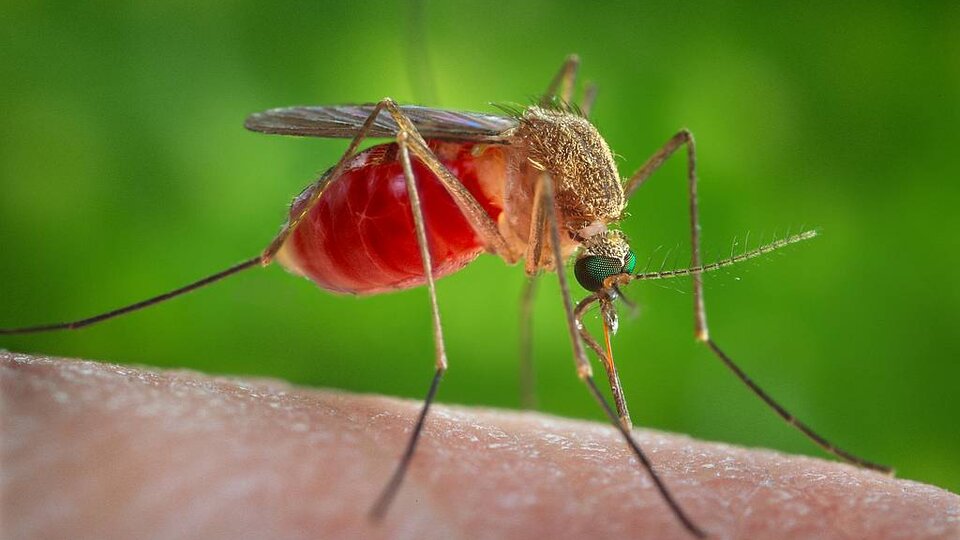
West Nile virus is the leading cause of mosquito-borne disease in the continental United States. It circulates primarily between birds and mosquitoes, mostly Culex species. When a mosquito bites an infected bird and then bites a person, it can pass the virus along. People are what epidemiologists call a dead-end host, which means you cannot give West Nile to another person through casual contact.
Georgia has had West Nile since 2001, when a dead crow in Lowndes County tested positive. Metro Atlanta is consistently one of the more active parts of the state, largely because dense tree cover, storm drains, and older infrastructure give Culex mosquitoes exactly the standing water they prefer. These are not floodwater mosquitoes that breed in marshes. They breed in the small, stagnant, organically rich water that collects in a clogged gutter, a forgotten bucket, a tarp fold, or a catch basin.
That is the core reason a Roswell yard can be a mosquito source while the greenway a mile away is not.
Two numbers to hold onto. About 80 percent of people infected with West Nile never develop any symptoms at all. Fewer than 1 percent develop the severe neuroinvasive form that attacks the brain and spinal cord. The gap between those two numbers is where all the public anxiety lives, and it is why accurate local information matters more than alarm.
At a Glance: 2026 West Nile Status Near Roswell
Data current as of September 1, 2026. Surveillance figures change weekly during the season. Refresh before resharing.
| Location | 2026 Status | Source and Date |
|---|---|---|
| Roswell (city limits) | No confirmed positive mosquito trap or human case announced | No FCBOH release as of Sept 1, 2026 |
| North Fulton generally | No confirmed positive trap announced in 2026 | No FCBOH release as of Sept 1, 2026 |
| Grant Park, Atlanta (Fulton) | Positive mosquito trap, first of the Fulton season | Fulton County Board of Health, July 8, 2026 |
| City of South Fulton | Positive traps at four locations, including Welcome All Park and Old National Park | City of South Fulton public health alert, late Aug 2026 |
| DeKalb County | Seven positive traps since July 22, including Avondale Estates, Clarkston, North Druid Hills, and unincorporated areas near Stonecrest and Doraville | DeKalb Public Health, Aug 2026 |
| Fulton County human cases | None reported | Fulton County Board of Health, Aug 2026 |
| Georgia human cases | 2 confirmed, in Muscogee and Chatham counties | CDC ArboNET / Georgia DPH, Aug 2026 |
| United States human cases | 143 confirmed nationally, figures current through mid-August | CDC ArboNET, Aug 2026 |
What Fulton County Has Actually Confirmed in 2026
The July detection. On July 8, 2026, the Fulton County Board of Health announced that its Environmental Health mosquito control staff had recovered positive West Nile samples from a trap in the Grant Park area. Dr. Brandon Leftwich, the Board of Health’s Environmental Health Director, said infected mosquitoes may pose a serious health risk and urged residents to take precautions. That was the county’s first positive trap of the season, and it landed roughly a week earlier than the first positive trap of the previous year.
The late-summer detections. In late August, the City of South Fulton issued its own public health alert after mosquito traps at four locations tested positive, including Welcome All Park and Old National Park. Crews scheduled spraying and planned neighborhood outreach around the affected parks.
Next door in DeKalb. DeKalb Public Health reported seven positive traps between July 22 and mid-August, spread across Avondale Estates, Clarkston, North Druid Hills, and unincorporated areas near Stonecrest and Doraville.
Human cases. Georgia has recorded two confirmed human West Nile cases in 2026. The first was in Muscogee County. The second, confirmed by the Georgia Department of Public Health on August 19, was an adult resident of Chatham County. Both Fulton and DeKalb counties have stated they have observed no human cases this year. For scale, Georgia recorded 18 confirmed human cases in 2025 and 53 in 2024, a year in which 18 of those cases were Fulton County residents and five people statewide died.
The Roswell Question, Answered Directly
There has been no announcement from the Fulton County Board of Health of a positive West Nile mosquito trap in Roswell or anywhere in North Fulton during the 2026 season. There has been no confirmed human case in Fulton County this year. As of September 1, 2026, the Board of Health’s West Nile news feed contains a single 2026 entry, and it is the Grant Park detection.
That is not the same thing as saying Roswell is risk-free, and the CDC is explicit about why. Surveillance is conducted unevenly across the country, and the agency’s own guidance states that the absence of reported non-human activity in an area should not be read as the absence of risk. A trap that has not tested positive may simply mean no trap was placed there, or that the sample timing missed the window.
There is also a reporting quirk worth knowing. Human West Nile cases are counted by the patient’s county of residence, not the county where the mosquito bit them. A Roswell resident bitten on a job site in South Fulton would be recorded as a Fulton County case with no geographic tie to the exposure.
The practical read. Roswell has no confirmed detection. Roswell sits in a county with confirmed detections, in a metro area with confirmed detections, during the most active national season since 2004. The correct response is the same set of routine precautions you would take in a normal Georgia August, applied consistently, not an emergency footing.
Why 2026 Is Running Hotter Than Usual
The CDC reported that 2026 opened as the earliest West Nile season on record since 2004, with the highest human case count for that point in the calendar in more than twenty years. By the end of June, national case counts were running at roughly five times the typical pace.
Locally, the pattern has been driven by heat plus rain. Repeated summer storms across metro Atlanta left standing water in exactly the containers Culex mosquitoes exploit, and sustained heat shortens the mosquito development cycle so populations rebuild faster after each rainfall. Fulton County residents interviewed in early August described mosquito activity as noticeably worse than usual.
Peak season is now. Historically, Georgia’s West Nile human cases cluster in August and September, and mosquitoes remain active into the fall. The virus season does not end when school starts. It ends with sustained cold.
Symptoms of West Nile Virus
The following reflects current CDC clinical guidance, last reviewed June 16, 2026.
Timing. Symptoms usually begin 2 to 6 days after an infected mosquito bite, but the window runs from 2 to 14 days. People with weakened immune systems may take longer to show symptoms.
No symptoms (about 80 percent of infections). Most people who contract West Nile never know it. They do not get sick, they do not seek care, and the infection is never recorded. This is the largest group by a wide margin.
Mild illness (about 20 percent of infections). Roughly one in five infected people develops flu-like illness. The typical presentation is fever accompanied by headache, body aches, joint pain, vomiting, diarrhea, or a rash. Most people with mild West Nile recover completely. The part that surprises people is the tail: fatigue and weakness can persist for weeks or months after the fever breaks.
Severe illness (fewer than 1 percent of infections). A small number of infections invade the central nervous system, causing inflammation of the brain (encephalitis) or of the membranes surrounding the brain and spinal cord (meningitis). Symptoms of severe illness can include high fever, severe headache, neck stiffness, stupor, disorientation, coma, tremors, convulsions, muscle weakness, vision loss, numbness, and paralysis.
Recovery from severe illness can take weeks or months, and some effects can be permanent. About 10 percent of people who develop the severe neuroinvasive form die.
Who is at higher risk. Risk of severe illness climbs with age. People 65 and older are three times as likely to develop neurologic illness as people under 65. Elevated risk also applies to people with certain chronic conditions including cancer, diabetes, high blood pressure, and kidney disease, and to people with weakened immune systems, including those taking medications for cancer, autoimmune conditions, inflammatory conditions, or organ transplant rejection.
Anyone can develop severe illness. Age and underlying conditions shift the odds, they do not draw a hard line.
What to Do If You Think You Have West Nile Virus
If you have mild flu-like symptoms after mosquito exposure. Contact your healthcare provider and tell them specifically that you have had mosquito exposure and are concerned about West Nile. That detail matters, because West Nile is diagnosed based on symptoms, exposure history, and laboratory testing together. A provider who does not know about the mosquito exposure has little reason to order the test, and West Nile in its mild form looks like a dozen other summer illnesses. Rest and fluids are the mainstay for mild cases.
Seek immediate medical attention if you experience any of the following: high fever, neck stiffness, muscle weakness, confusion, or tremors. The CDC lists these as the signs that warrant immediate care. Do not wait to see if they pass overnight.
Understand what treatment exists. There is no vaccine to prevent West Nile virus in people, and there are no antiviral medications that treat it. Care for severe cases is supportive, which can mean hospitalization, intravenous fluids, pain management, respiratory support, and nursing care. This is precisely why prevention carries so much weight with this particular disease. There is no back-end fix.
If you are in a higher-risk group, meaning 65 or older, managing a chronic condition, or immunocompromised, call your provider earlier rather than later when symptoms appear.
Report dead birds. Georgia residents are asked to report dead bird sightings to their local county health department, since birds are the reservoir species and die-offs can be an early warning signal. Do not handle any dead animal with bare hands. Dead birds do not transmit West Nile to people directly.
Preventing Mosquito Bites in a Roswell Yard
The Fulton County Board of Health promotes the 5 Ds of mosquito bite prevention. They are worth taking seriously specifically because there is no treatment on the other side.
Dusk and dawn. Culex mosquitoes are most active at dusk, overnight, and at dawn. If you can shift outdoor time out of those windows during peak season, that alone reduces exposure meaningfully.
Dress. Loose-fitting, long-sleeved shirts and long pants reduce the amount of exposed skin. Loose matters, since mosquitoes can bite through fabric pulled tight against skin.
DEET. Apply an EPA-registered insect repellent to exposed skin. DEET is the one health departments name most often. Picaridin, IR3535, and oil of lemon eucalyptus are also EPA-registered options.
Drain. This is the highest-leverage item on the list and the one most Roswell homeowners under-execute. Empty anything holding standing water: buckets, barrels, flowerpot saucers, tarps, kiddie pools, wheelbarrows, pet bowls, clogged gutters, corrugated drain extensions, and the bottom of your recycling bin. A Culex mosquito can complete its life cycle in a container the size of a coffee cup.
Doors. Check that doors and windows seal, and repair torn screens. Trim overgrown grass and weeds, which give adult mosquitoes daytime resting cover.
The Roswell-specific angle. North Fulton lots tend to be larger, more heavily wooded, and closer to creek corridors than lots inside the perimeter. That is a genuine quality-of-life advantage and also a mosquito advantage. Tree canopy holds humidity, leaf litter clogs gutters and drains, and creek-adjacent low spots hold water after storms. If you back up to a wooded buffer or a tributary, your drain-and-dump routine needs to be a weekly habit during summer and early fall, not a one-time spring cleanup.
What Happens When a Trap Tests Positive
Knowing the county’s protocol helps you interpret what a positive result in your area actually means.
Trapping and testing. Fulton County Board of Health Environmental Health staff run mosquito surveillance traps through the season and test collected samples for West Nile.
Treatment. Once infected mosquitoes are found, the Board of Health works with a mosquito control vendor and begins spraying EPA-approved adulticides within roughly a quarter mile of the affected area, once a week for at least four weeks.
Community notification. Staff canvass surrounding neighborhoods to inform residents of the positive result, explain bite prevention, and ask people to eliminate standing water on their own property. When a park is involved, signage goes up on site.
What it means for you. A positive trap is a signal that infected mosquitoes are present in that area, not a case count and not an outbreak declaration. It is the surveillance system working as designed, and it triggers a response before human cases appear. That is the point of the program.
For questions or to report an environmental health concern, the Fulton County Board of Health general line is 770-520-7500.
A Roswell Case Worth Remembering
Roswell already has a documented, severe West Nile case in its recent history. Jule Hamrick, a Roswell resident, was bitten by a mosquito in her own backyard around Labor Day of 2018. Within days she was paralyzed from the waist up and hospitalized on a ventilator, communicating by blinking. She spent months in additional care and years in physical therapy relearning to walk. Her case, reported by the Atlanta Journal-Constitution and later by CNN, is the neuroinvasive outcome that fewer than 1 percent of infected people experience. She was 57 at the time, with no chronic conditions.
Her story is not the typical West Nile outcome and should not be read as one. It is included here for one reason: it happened in a Roswell backyard, to a healthy adult, in early September, which is precisely the place and the time of year this article is about. The 5 Ds are not abstract public health boilerplate. They are the only intervention that exists.
Final Thoughts: Calibrating Your Actual Risk
If you want a straight answer on how worried to be, here is the honest version.
The risk of infection in Roswell right now is real but low. No confirmed local detection, no human cases in the county, and a virus that most often produces no symptoms at all. Panic is not warranted and neither is a canceled fall.
The risk is not zero, and the season is at its peak. Fulton County has confirmed detections. The national season is the most active in two decades. August and September are historically Georgia’s heaviest months, and mosquitoes stay active into fall.
The asymmetry is what should drive your behavior. Prevention costs you a bottle of repellent, a weekly walk around the yard, and some attention to when you are outdoors. There is no vaccine and no treatment on the other side of an infection. When the downside has no remedy, cheap prevention is the entire strategy.
Watch official sources, not social feeds. For Roswell specifically, the Fulton County Board of Health is the authority on local mosquito surveillance and any future detection. The Georgia Department of Public Health handles human case confirmations. The CDC publishes national and state surveillance data, updated every one to two weeks through the season. If a positive trap turns up in North Fulton, it will appear there before it appears anywhere else.
If your fall plans include the river, the greenways, or downtown events, check conditions before you go with the Roswell River Hub and the Roswell Business Directory, and take five minutes to walk your yard before dusk. That is the whole ask.
Roswell Pulse: local information, verified before it is published.