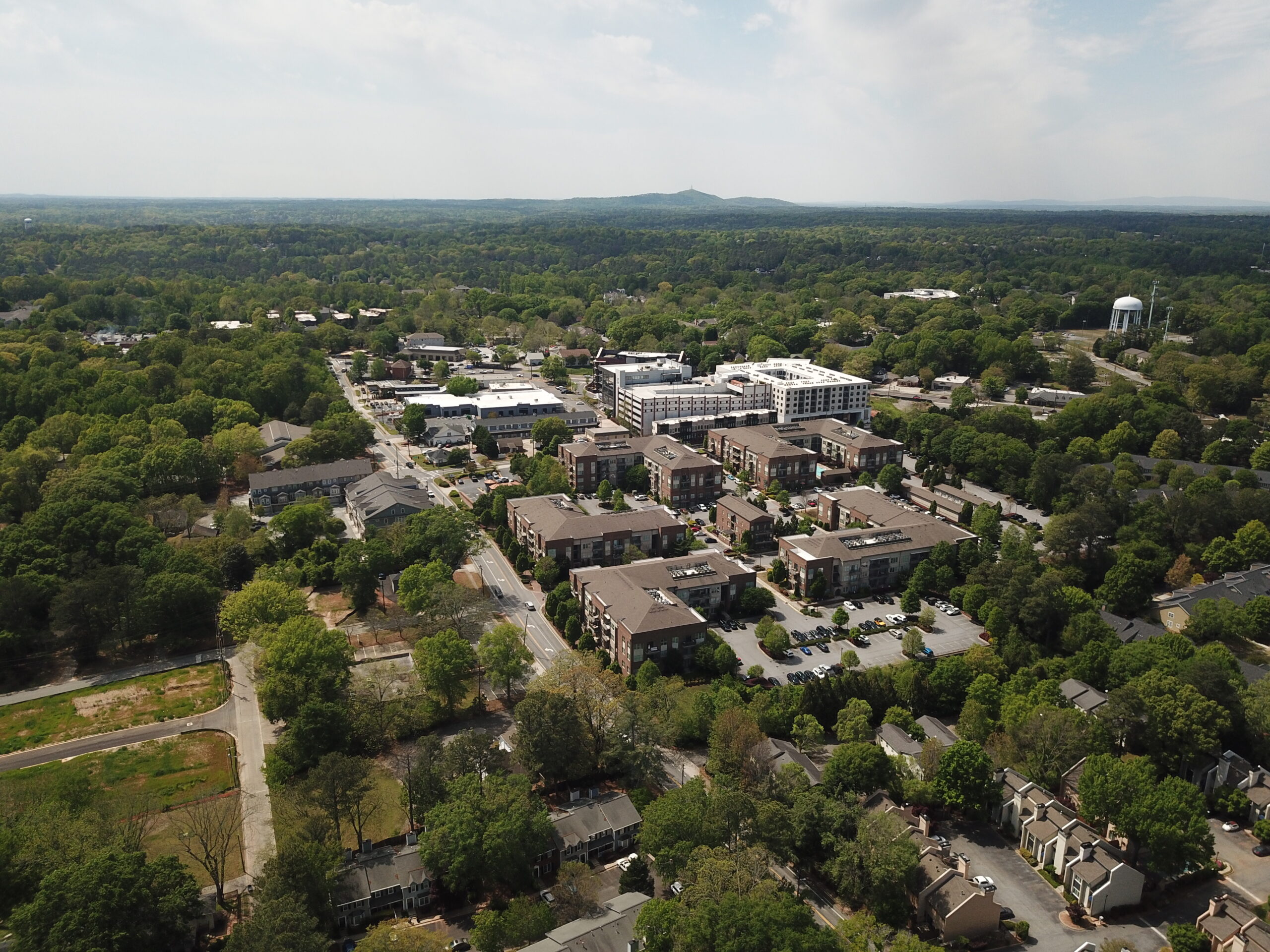


Opening a storefront in Roswell, Georgia is one of the most exciting steps a new business owner can take, and it is also one of the most confusing. Between zoning verification, certificates of occupancy, the occupation tax certificate (what most people call a “business license”), industry-specific permits, and the City of Roswell’s new online Permitting and Licensing HUB, the path from “I found a great space on Canton Street” to “we’re open” involves more moving parts than most first-time owners expect. If you have been searching for how to open a business in Roswell GA, how to get a Roswell business license, or simply what permits you need to open a storefront in Roswell, this guide walks you through the entire process in plain English, with facts sourced directly from the City of Roswell.
We built this guide for the same reason we build tools at Roswell Pulse: because the people opening shops, studios, salons, cafes, and clinics across our city deserve a clear map. If you are also weighing whether to buy or lease your space, thinking through a marketing budget, or researching the local competitive landscape, pair this article with our companion pieces on the Roswell small business scene and choosing a commercial location in Roswell. For now, let us untangle permitting.
How to Think About Opening a Storefront in Roswell
Before any single form, it helps to understand the shape of the process. Opening a storefront in Roswell is not one application. It is a sequence of approvals from several different city divisions, and each one gates the next. The most common reason new owners get stuck is that they attempt these steps out of order, sign a lease before confirming their use is even allowed at that address, or begin a build-out before the right permits are in hand.
Think of it as four checkpoints. First, zoning: confirming your type of business is permitted at your exact address. Second, the physical space: any build-out permits and, for most new commercial tenants, a Certificate of Occupancy. Third, the business license itself: the Occupation Tax Certificate that every business in Roswell must hold before opening. Fourth, industry-specific permits: alcohol, food service, signage, and similar approvals that depend on what you actually sell. Get these in the right order and the process is manageable. Skip a step and you can lose weeks, and sometimes money.
The Roswell Storefront Permitting Path At A Glance
| Step | What it covers | Who handles it | When you need it |
|---|---|---|---|
| 1. Zoning verification | Confirms your use is allowed at your specific address | Planning and Zoning Division (Community Development) | Before you sign a lease |
| 2. Build-out and Certificate of Occupancy | Structural changes, tenant improvements, occupancy sign-off | Community Development | Before you open, for most new commercial tenants |
| 3. Business License (Occupation Tax Certificate) | Legal authorization to operate in the city | Financial Services / Business Registration | Before you open, always |
| 4. Industry permits | Alcohol, signs, fire, food, and similar | City divisions plus state agencies | Before the related activity begins |
| All steps | Applications, payments, inspections, certificates | Roswell Permitting and Licensing HUB (online) | Throughout |
Why the Roswell Permitting Process Trips Up New Owners
The Roswell permitting process is not designed to be difficult, but several details catch first-time owners off guard. Understanding them ahead of time is half the battle.
Everything now runs through one online system. As of October 13, 2025, the City of Roswell launched a new online Permitting and Licensing HUB, built on Tyler Technologies software. The City no longer accepts applications through email, paper, or walk-up, and instead requires all applicants to create an account and apply through the Permitting and Licensing HUB. You can still visit City Hall for help, but even at the counter the process is completed digitally, so you are encouraged to bring your own device and digital copies of your documents while a Resident and Business Services Specialist walks you through it. This is a major improvement over the old patchwork, but it means step one for nearly everyone is creating a HUB account.
Zoning is the silent deal-breaker. Many owners fall in love with a space, sign a lease, and only then learn their intended use is not permitted there. The City is explicit that for commercial locations you should verify zoning compliance with the Planning and Zoning Division before applying, because your intended use must be permitted under the zoning designation for your specific address.
A Certificate of Occupancy can gate your license. For new tenants moving into a commercial space, a Certificate of Occupancy from Community Development may be required before your business license is even issued. This is a sequencing trap: owners assume the license comes first, when in practice the space often has to be signed off first.
The permit you need depends entirely on what you do. A retail boutique, a restaurant with a patio bar, a hair salon, and a tattoo studio each face a different combination of zoning rules, state licenses, and city permits. There is no single “storefront permit,” which is exactly why a guided, question-based approach beats a generic checklist.
Step 1: Confirm Zoning Before You Sign a Lease
The single most valuable thing you can do before committing to a location is confirm that your business is allowed to operate there. Roswell’s zoning designations govern what can happen at each address, and not every commercial use is permitted in every commercial zone.
Contact the Roswell Planning and Zoning Division, part of Community Development, and confirm that your intended use is permitted at the specific parcel you are considering. If you are eyeing a home-based operation rather than a storefront, be aware that Roswell maintains a specific list of prohibited home occupations. Uses specifically prohibited as home occupations include auto sales or auto repair, restaurants, animal hospitals, veterinary clinics, kennels or the keeping of animals, funeral homes, retail or wholesale shops, machine shops, personal service establishments, special event facilities, and lodging services. If your concept appears on that list, you will need a commercial storefront, which loops you right back to zoning verification for that commercial address.
Doing this first protects you from the worst-case scenario: a signed lease on a space where your business legally cannot operate.
Step 2: Build-Out Permits and Your Certificate of Occupancy
Once zoning is confirmed, turn to the physical space. If you are modifying a commercial space, installing signage, or making structural changes, you will need to work with Roswell Community Development on building permit requirements. Building, Land Disturbance, Planning and Zoning, Events, Fire, Right-of-Way, Tree, Film, Photo, and Sign permits are all included in the Permitting and Licensing HUB.
A key point for new tenants: a Certificate of Occupancy may be required before the business license is issued for new commercial tenants. Practically, that means your inspections and occupancy sign-off may need to clear before your Occupation Tax Certificate is granted. Build this into your timeline. If your space needs plumbing, electrical, or structural work, those permits and inspections take time, and rushing a lease-signing or an opening date around them is where budgets and calendars go sideways.
If you are hiring a licensed contractor, good news: your licensed contractor can apply for the required permit under their name and license type, and contractors are required under Georgia law to obtain required building permits before beginning work. The City still recommends that you, the property owner or tenant, verify whether a permit is required before allowing any work to begin.
Step 3: The Roswell Business License (Occupation Tax Certificate)
Every business operating inside Roswell city limits needs a business license, formally the Occupation Tax Certificate, before it opens. This requirement covers home-based businesses, nonprofits (which must register but are exempt from paying occupation tax), and out-of-state businesses with a Roswell location, and registration and payment must happen before you open.
Here is where Roswell’s approach is actually quite favorable to small businesses, once you understand it.
How the tax is calculated. Roswell uses North American Industry Classification System (NAICS) codes to assign each business a profitability ratio, and your occupation tax is generally your gross receipts multiplied by that ratio. Higher-margin industries carry higher ratios; lower-margin industries carry lower ones.
The small-business exemption. A $100,000 exemption applies to businesses reporting $100,000 or less in gross receipts. For many brand-new storefronts in their first year, this is a meaningful break.
The fees on top. A $100 administrative fee applies to all businesses, a $50 non-refundable regulatory fee applies to commercial businesses only, and a fee of $12 per employee is assessed. Review the City’s current Schedule of Rates for the figures that apply to your situation, since these amounts are set by the City and can change.
Employees and the tax. For the gross-receipts profitability calculation itself, employee count only becomes a factor at higher headcounts, which means essentially every small storefront in Roswell is calculating occupation tax on gross receipts rather than paying a per-head charge on the tax formula. Separately, note the E-Verify rule below.
E-Verify. If your company has 11 or more W-2 employees who work 35 hours or more per week and withhold payroll taxes, your company is required to have an E-Verify number, and your Occupational Business Certificate will not be issued until the City receives that number.
State professional licenses. Professionally licensed businesses are regulated by the Georgia Secretary of State, and a copy of your Georgia state license must be attached to the application for processing. Lawyers, CPAs, medical providers, cosmetologists, and similar professions need their state license in hand first.
Once every requirement is met, you will be able to print your certificate directly from your HUB dashboard.
Step 4: Industry-Specific Permits
This is the step that varies most by business type, and the reason a one-size-fits-all checklist so often fails new owners.
Alcohol. Selling alcohol in Roswell requires two separate licenses. You need a City of Roswell alcohol license and a Georgia Department of Revenue alcohol license through the Georgia Tax Center, and both must be in place before you sell. If your staff will pour or handle alcohol, note that Alcohol Pouring and Handling Permits are handled directly by the Roswell Police Department rather than through the HUB.
Signage. Storefront signs require a Sign Permit, which is available through the HUB. Sign rules are specific in Roswell, so confirm size and placement requirements before you order fabrication.
Fire and life safety. Depending on your space and occupancy type, Fire permits and inspections may apply. These are included in the HUB.
Police-handled permits. A handful of licenses sit outside the HUB and go through the Roswell Police Department, including Alcohol Pouring and Handling Permits, Massage Establishment Licenses, Solicitor Permits, Demonstration Permits, Weapons Discharge Permits, and Work Permits. If your business touches any of these categories, plan for a separate track.
The Roswell Permitting and Licensing HUB, Explained
The HUB is the digital front door to almost everything above. Through the Permitting and Licensing HUB you can submit an application for a permit, plan, or license, view application status, pay online, view review comments, receive your permit to begin work, schedule inspections, and receive your license or certificate of occupation online.
A few practical notes. Anyone who wants to use these services needs a HUB account, and if you have previously logged in to Tyler Technologies applications used by surrounding cities and counties, such as Energov or Munis, that account may already work for Roswell. Multiple users from one company can access the same account, and creating a shared company account is often recommended so access is not lost when an employee leaves. When a reviewer requests corrections, you will receive a comment email, then respond and upload revised documents directly through the HUB, which keeps a record of all submissions and revisions.
Key Dates and Fees You Cannot Afford to Miss
Two dates matter enormously in Roswell, and one of them surprises people every single year.
Your certificate expires December 31, renewal payment is due March 15, and a 10 percent late penalty applies immediately after March 15 with no grace period. That March 15 deadline catches people off guard because most nearby Georgia cities, including Atlanta, Sandy Springs, Alpharetta, and Marietta, use a March 31 or April 1 deadline, making Roswell two full weeks earlier. Put it on your calendar the day you open.
On payment methods, if you owe a larger occupation tax bill, the way you pay can save you real money. Paying a $500 bill by credit card online incurs a $15 surcharge, while the same payment by eCheck through the City’s payment portal costs $1.50.
All of these figures are current as of this writing in 2026 and are set by the City of Roswell, so confirm the latest amounts and dates on the City’s official pages before you rely on them.
Where New Owners Get Stuck, and How We Made It Easier
Here is the honest truth about everything above. The information exists, but it lives across multiple city divisions, multiple web pages, a separate police records office, at least one state agency, and a login-gated software portal. A first-time owner has to already know which questions to ask before they can even find the right page. That is a lot to ask of someone who is also negotiating a lease, ordering inventory, and hiring staff.
The developers at Pulse Media Group and Roswell Pulse recognized this pain point directly, and we built a solution for it.
Meet the Roswell Business Permit Flowchart. We developed a free, guided wizard application that helps future business owners get organized for the Roswell permitting process. Instead of forcing you to read a dozen government pages and guess which apply to you, the tool asks a short series of plain-language questions about your business, then identifies the exact process you need to follow to secure your City of Roswell permits. After just a few questions, you receive a downloadable, printable checklist tailored to your specific business, so you walk into the HUB knowing precisely what you need. You can use it right now at https://roswellga.online/permit-checker.
The design goal is simple: make it easier for business owners, and cleaner for the city. When applicants arrive prepared, with the right documents and the right permits identified in the right order, everyone benefits. Fewer wrong-permit applications, fewer stalled reviews, fewer frustrated phone calls. Our wizard applications are built to streamline the permitting process for both the applicant and the City of Roswell at the same time.
This is what we mean when we say Pulse Media Group is raising the bar in Roswell, Georgia. Rather than simply describing a complicated process, we build intuitive applications that simplify it.
About Pulse Media Group and Roswell Pulse
Pulse Media Group is an authority in local web development and application development in Roswell, Georgia, and we have brought a range of technology firsts to our city. We built and grew a hyper-local Facebook community group that has swelled to more than 19,000 members, giving Roswell residents and businesses a genuine digital town square. We created an interactive Roswell Business Directory that serves both Roswell businesses and the residents looking for them. And now we are publishing a growing library of Wizard Help Tools, of which the Business Permit Flowchart is one, designed to make permitting in Roswell an easier and cleaner process for everyone involved.
Our approach is consistent: take a process that is genuinely useful but genuinely confusing, and turn it into something a real person can complete in a few minutes. That is what modern local web development should do for a community, and it is why we keep building.
Final Thoughts: How to Actually Get Started
If you are opening a storefront in Roswell, work the four checkpoints in order. Verify zoning before you sign anything. Handle build-out permits and your Certificate of Occupancy before you plan an opening date. Secure your Occupation Tax Certificate through the Permitting and Licensing HUB. Layer on the industry-specific permits your concept requires. Mark March 15 on your calendar. And when the amounts or dates matter to your budget, always confirm the current figures on the City of Roswell’s official site.
Then let technology do the organizing for you. Start with our free Roswell Business Permit Flowchart at https://roswellga.online/permit-checker, answer a few quick questions, and print the checklist built for your business.
Ready to see everything we have built for Roswell? Explore the full Pulse Media Group Tools and Apps Library at https://roswellga.online/tools, where our growing collection of Wizard Help Tools is designed to make the hard parts of running a Roswell business a whole lot simpler.
Roswell Pulse: built by locals, for the people building Roswell.re the full Pulse Media Group Tools and Apps Library at https://roswellga.online/tools, where our growing collection of Wizard Help Tools is designed to make the hard parts of running a Roswell business a whole lot simpler.